
foundation subject
Constitutional Law Notes
Constitutional Law is one of the most important and frequently tested subjects for LLB and BA LLB students, covering the framework of the Indian Constitution — fundamental rights, directive principles, the union and state governments, the judiciary, and constitutional remedies. These handwritten Constitutional Law notes break the subject into manageable parts, with clear explanations of articles, landmark judgments, and illustrations. You can purchase the complete Constitutional Law notes as one combined bundle, or buy the individual parts separately if you only need to cover a specific portion of the syllabus. All notes are handwritten, well-organized, and delivered instantly as downloadable PDFs after payment.
Secure Payment
Razorpay protected
Instant PDF Access
Download right after payment
Verified Handwritten Notes
Prepared by Vanshika
Free preview for all notes
See quality before buying

syllabus coverage
What Will You Learn from These Constitutional Law Notes?
Constitutional Law explores the nature, meaning, purpose, and principles of law. These handwritten notes are designed to help BA LLB and LLB students understand fundamental legal theories, important concepts, and landmark judgments in a structured, exam-oriented format.
Topics covered in these notes:
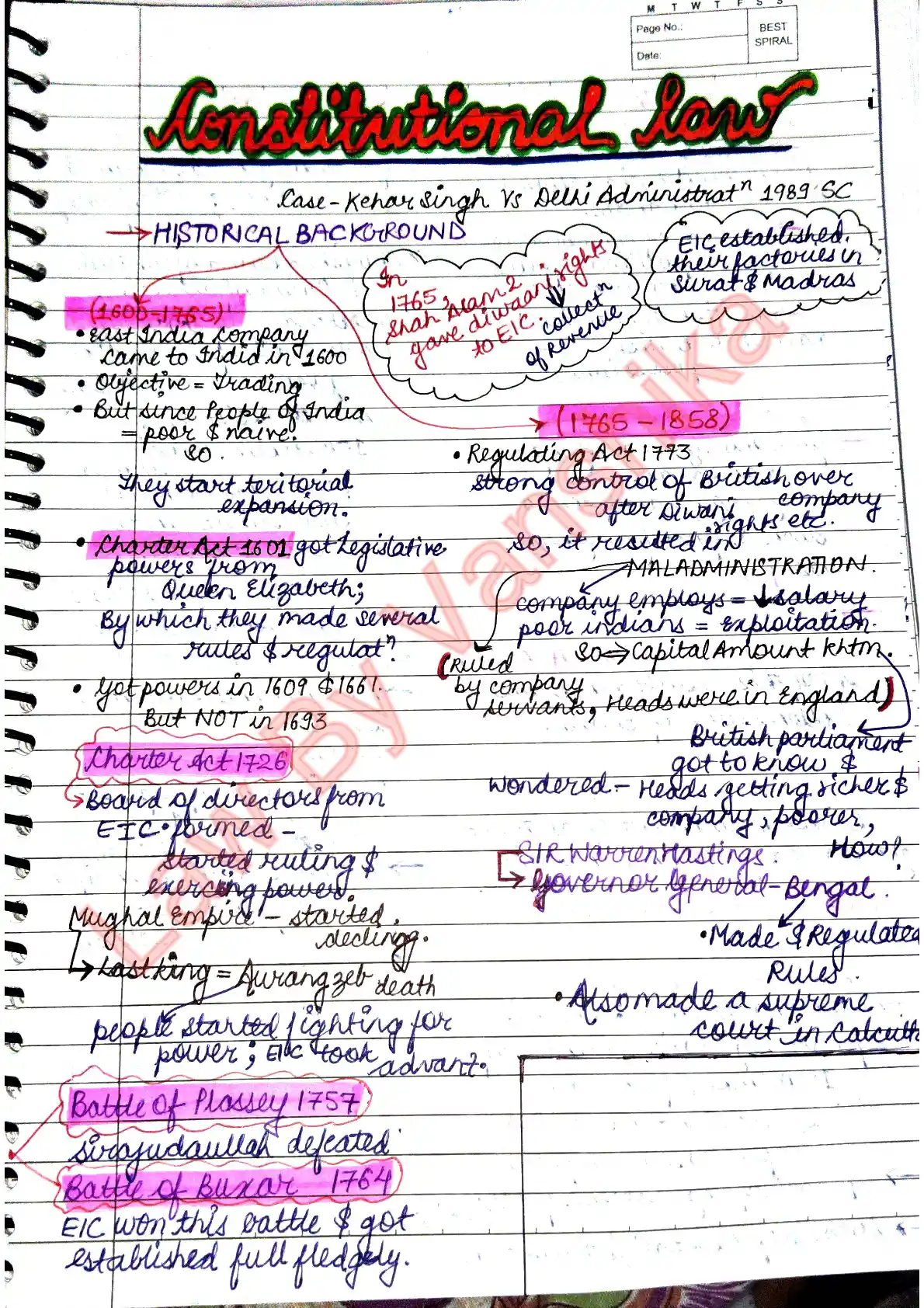
- Historical Background of the Indian Constitution — Understand the historical developments and major legislative acts that contributed to the making of the Indian Constitution.
- Salient Features of the Constitution — Key characteristics, important facts, and distinctive features of the Indian Constitution.
- Constituent Assembly of India — Formation, composition, major committees, and the role of the Constituent Assembly in drafting the Constitution.
- Preamble and Sources of the Constitution — The meaning and significance of the Preamble, its key objectives, and the sources of constitutional provisions.
- Union and Its Territory — Articles 1–4 covering the territory of India, formation of new states, and alteration of state areas, boundaries, and names.
- Citizenship — Constitutional provisions relating to citizenship under Articles 5–11.
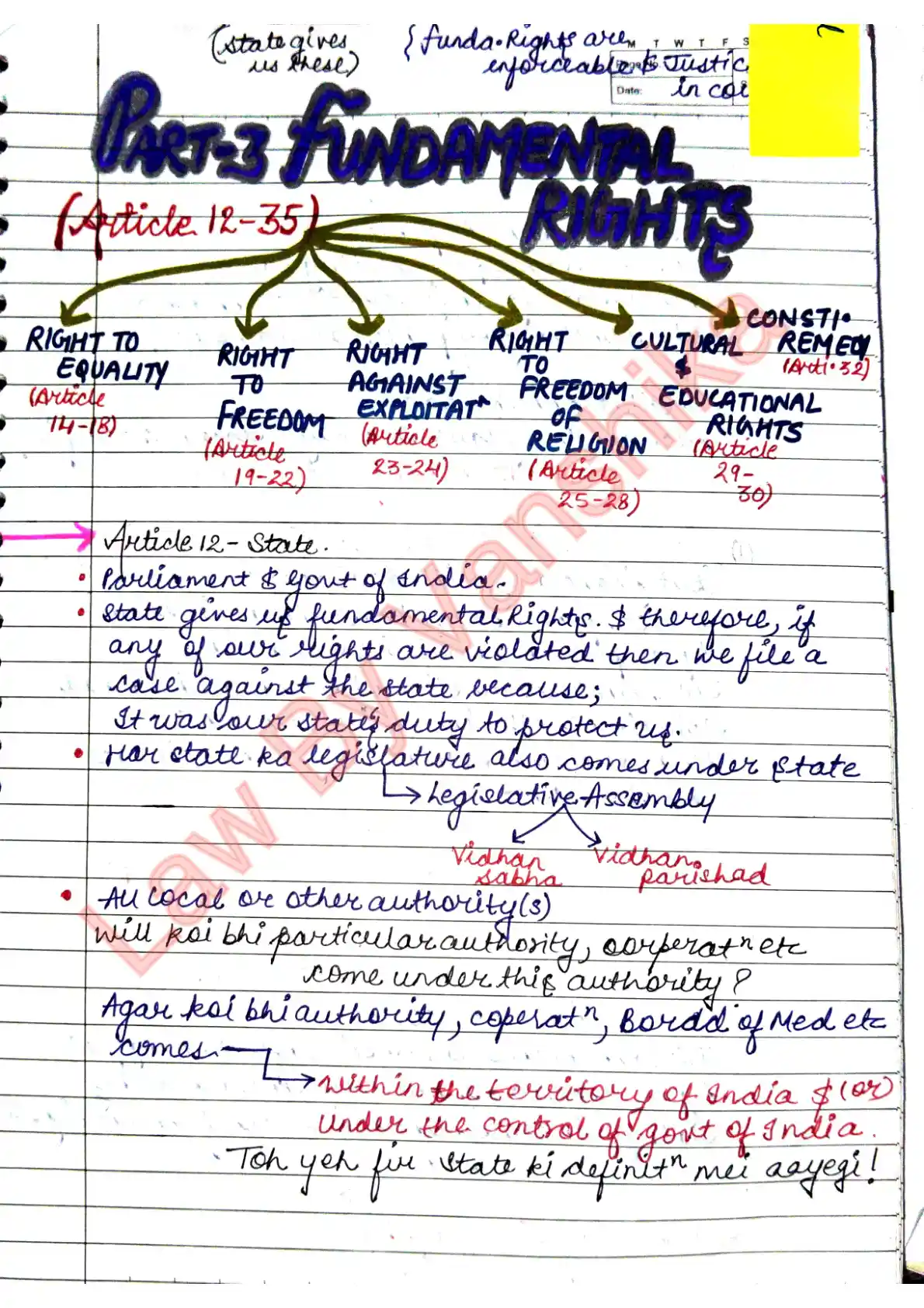
- Fundamental Rights — Articles 12–35, including equality, freedoms, protection against exploitation, freedom of religion, cultural and educational rights, and constitutional remedies.
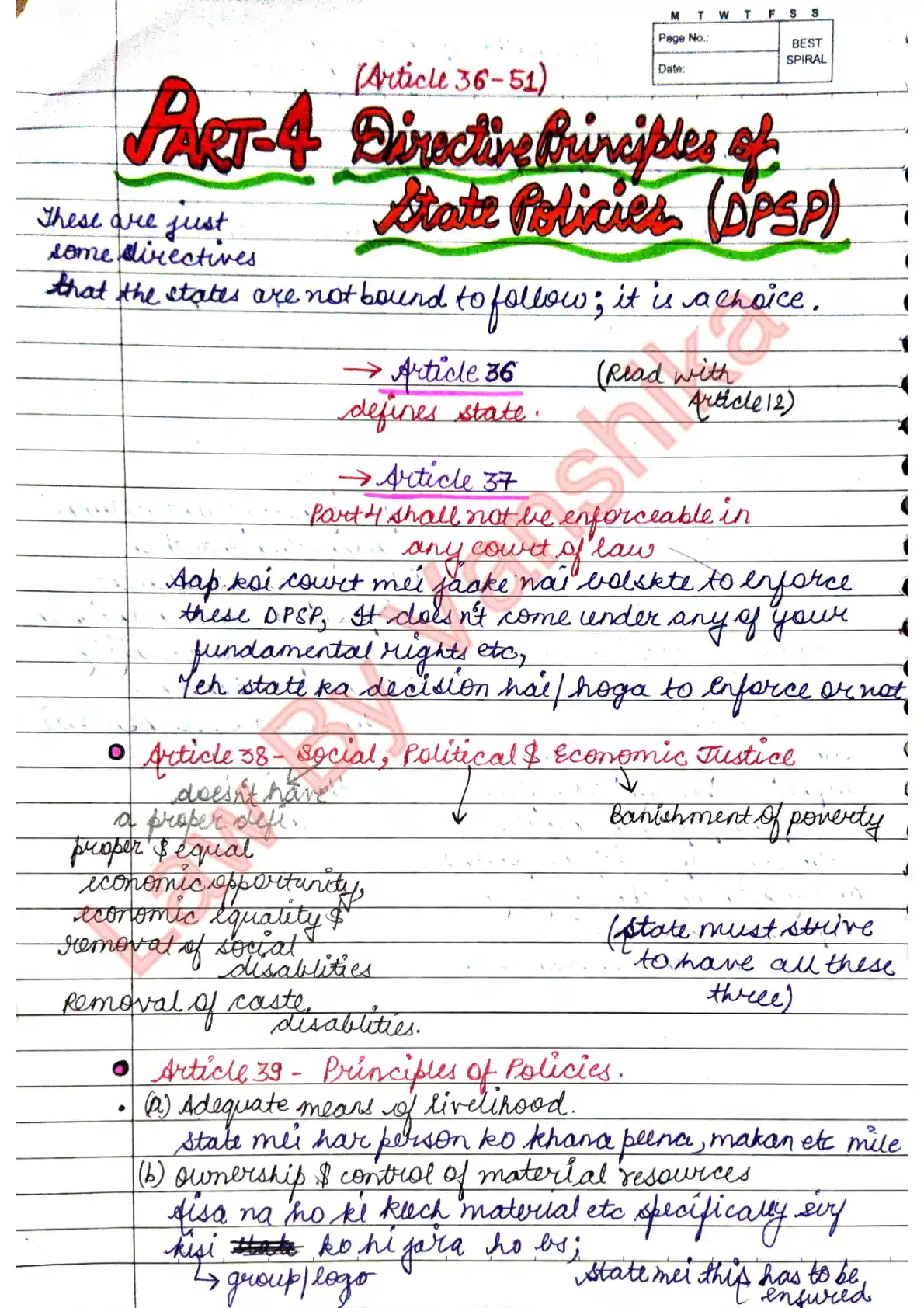
- Directive Principles and Fundamental Duties — Directive Principles of State Policy under Articles 36–51 and Fundamental Duties under Article 51A, along with their constitutional significance.
- Doctrine of Basic Structure — The basic structure doctrine, limitations on Parliament's amending power, and its significance in constitutional law.
- Constitutional Remedies — Constitutional remedies under Articles 32–35, including writ jurisdiction and the protection of Fundamental Rights.
- The Union — Part V, Articles 52–151, covering the Union Executive, President, Parliament, Lok Sabha, Rajya Sabha, judiciary, and legislative powers.
- The States — Part VI, Articles 152–237, covering state executives, Governors, state legislatures, High Courts, subordinate courts, and legislative powers.
- Union Territories — Part VIII, Articles 239–242, covering the administration and constitutional framework of Union Territories.
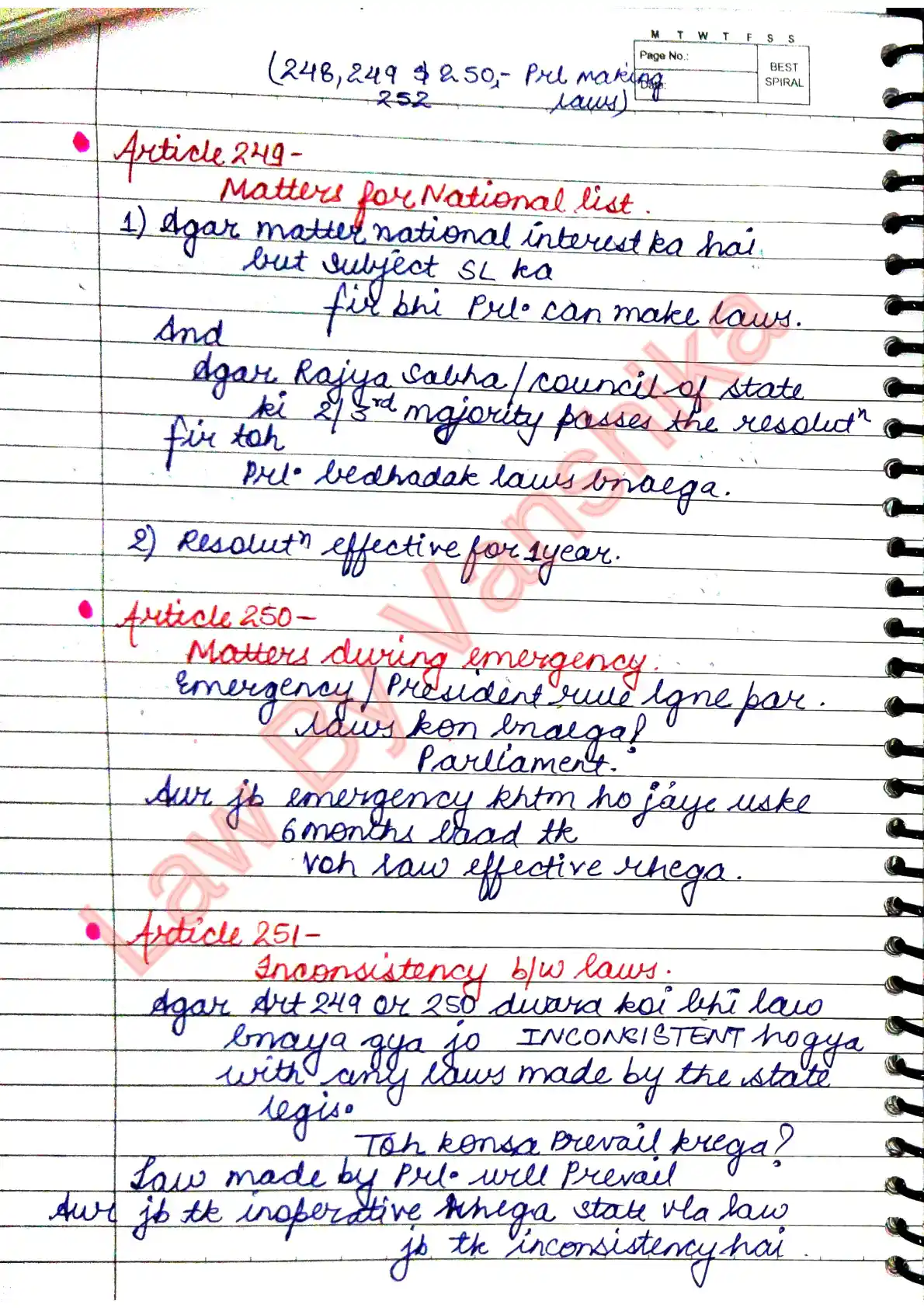
- Relations Between the Union and the States — Part XI, Articles 245–263, covering legislative and administrative relations between the Union and the states.
- Property, Contracts, Rights and Liabilities — Part XII, Articles 294–300A, covering property, contracts, rights, liabilities, obligations, suits, and the constitutional right to property.
- Finance Commission — Article 280, including the constitution, role, and recommendations of the Finance Commission.
- Trade, Commerce and Intercourse — Part XIII, Articles 301–307, covering constitutional provisions governing trade, commerce, and intercourse within India.
- Services Under the Union and the States — Part XIV, Articles 308–323, covering public services, recruitment, conditions of service, and Public Service Commissions.
- Tribunals — Part XIVA, Articles 323A–323B, covering administrative tribunals and tribunals for other specified matters.
- Elections — Part XV, Articles 324–329A as listed in the supplied topic outline, covering the Election Commission and constitutional provisions relating to elections.
- Special Provisions Relating to Certain Classes — Part XVI, Articles 330–342, covering constitutional provisions concerning representation and specified classes.
- Official Language — Part XVII, Articles 343–351, covering constitutional provisions relating to official languages.
- Amendment of the Constitution — Part XX, Article 368, covering the constitutional amendment procedure and relevant limitations on the amending power.
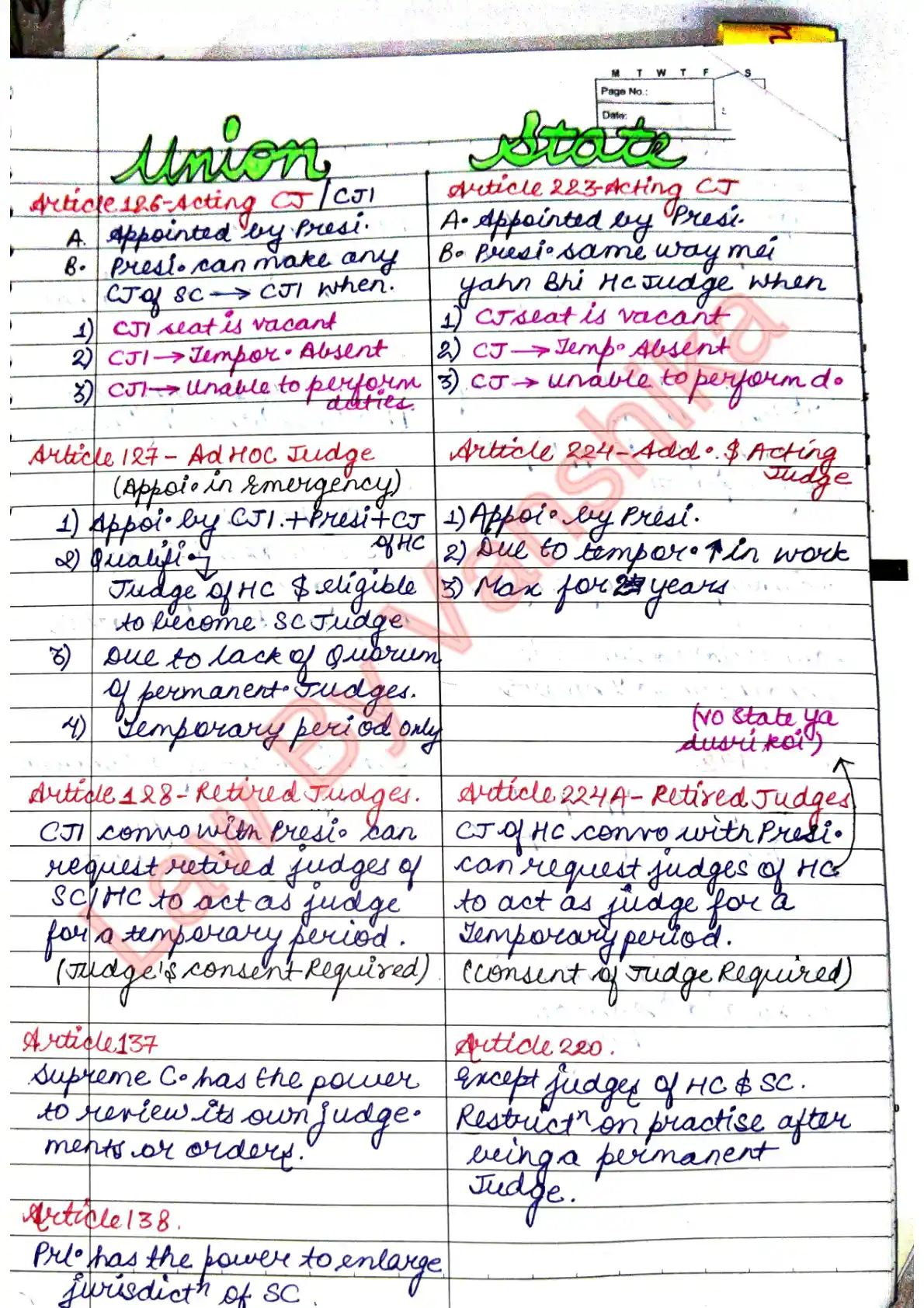
- Jurisdiction of the Supreme Court and High Courts — The constitutional framework governing the Supreme Court under Articles 124–147 and High Courts under Articles 214–231.
- Impeachment of the President — Article 61, covering the constitutional procedure for impeachment of the President of India.
- Financial Bills — Articles 109, 110, and 117, covering Money Bills, special procedures for financial legislation, and Financial Bills.
- Vidhan Sabha and Vidhan Parishad — Articles 168–212, covering the composition, structure, functioning, and legislative procedures of state legislatures.
These notes provide a structured resource for understanding core constitutional law concepts and revising important topics.
write better answers
Tips for Writing Better Answers in Constitutional Law Exams
Constitutional Law requires conceptual understanding, clear explanations, and the ability to evaluate legal theories. Use these tips to make your examination answers more structured and effective.
- 1
Begin with the relevant constitutional provision.
Identify the applicable Article and explain its meaning, scope, and constitutional significance in your own words.
- 2
Use landmark judgments where relevant.
Support your answer with important Supreme Court decisions, such as Kesavananda Bharati v. State of Kerala for the basic structure doctrine, explaining the principle established by the judgment.
- 3
Structure answers around constitutional principles.
Use a clear introduction, relevant Articles, explanation of the legal principle, important judicial interpretations, and a focused conclusion.
- 4
Distinguish between related constitutional concepts.
Understand differences such as Fundamental Rights and Directive Principles, the President and the Governor, and Money Bills and other Financial Bills.
- 5
Explain the reasoning behind landmark judgments.
When discussing a case, briefly describe the relevant issue, the Court's decision, and the constitutional principle established or clarified.
- 6
Connect constitutional provisions with their purpose.
Explain how a provision operates and why it matters within the constitutional framework instead of simply memorizing Article numbers.
exam tip
Prioritize understanding over memorization. Practise explaining legal theories in your own words and allocate your time according to the marks assigned to each question.
before you buy
Frequently Asked Questions

about the founder
Vanshika Tomar
I'm Vanshika Tomar, a BA LLB student with a passion for reading, writing, and simplifying complex legal concepts into clear and easy-to-understand study material. My goal is to help students study smarter through well-structured and exam-oriented notes.
Every note available on this platform has been personally handwritten and prepared by me during my own exam preparation. These notes played a significant role in helping me achieve excellent academic results, and I truly hope they make your learning journey easier, more organized, and more confident. Thank you for being a part of this journey. Happy Learning!
For law notes in Hindi language or other queries, DM on the given IG account
@vanshikaaa01__