
foundation subject
Law of Torts Notes
The Law of Torts is an important subject for LLB and BA LLB students, covering civil wrongs, legal rights, liability, defences, and remedies. These handwritten Law of Torts notes explain core principles through topics such as strict liability, defamation, trespass, nuisance, negligence, medical negligence, and vicarious liability, alongside important case laws and legal maxims. You can purchase the complete Law of Torts notes as one combined bundle or buy the individual parts separately to focus on a specific portion of the syllabus. All notes are handwritten, well-organized, and delivered instantly as downloadable PDFs after payment.
Secure Payment
Razorpay protected
Instant PDF Access
Download right after payment
Verified Handwritten Notes
Prepared by Vanshika
Free preview for all notes
See quality before buying


syllabus coverage
What Will You Learn from These Law of Torts Notes?
Law of Torts examines civil wrongs, the protection of legal rights, liability, defences, and remedies. These handwritten notes help BA LLB and LLB students revise essential principles, distinguish related concepts, and understand important case laws in a structured, exam-oriented format.
Topics covered in these notes:
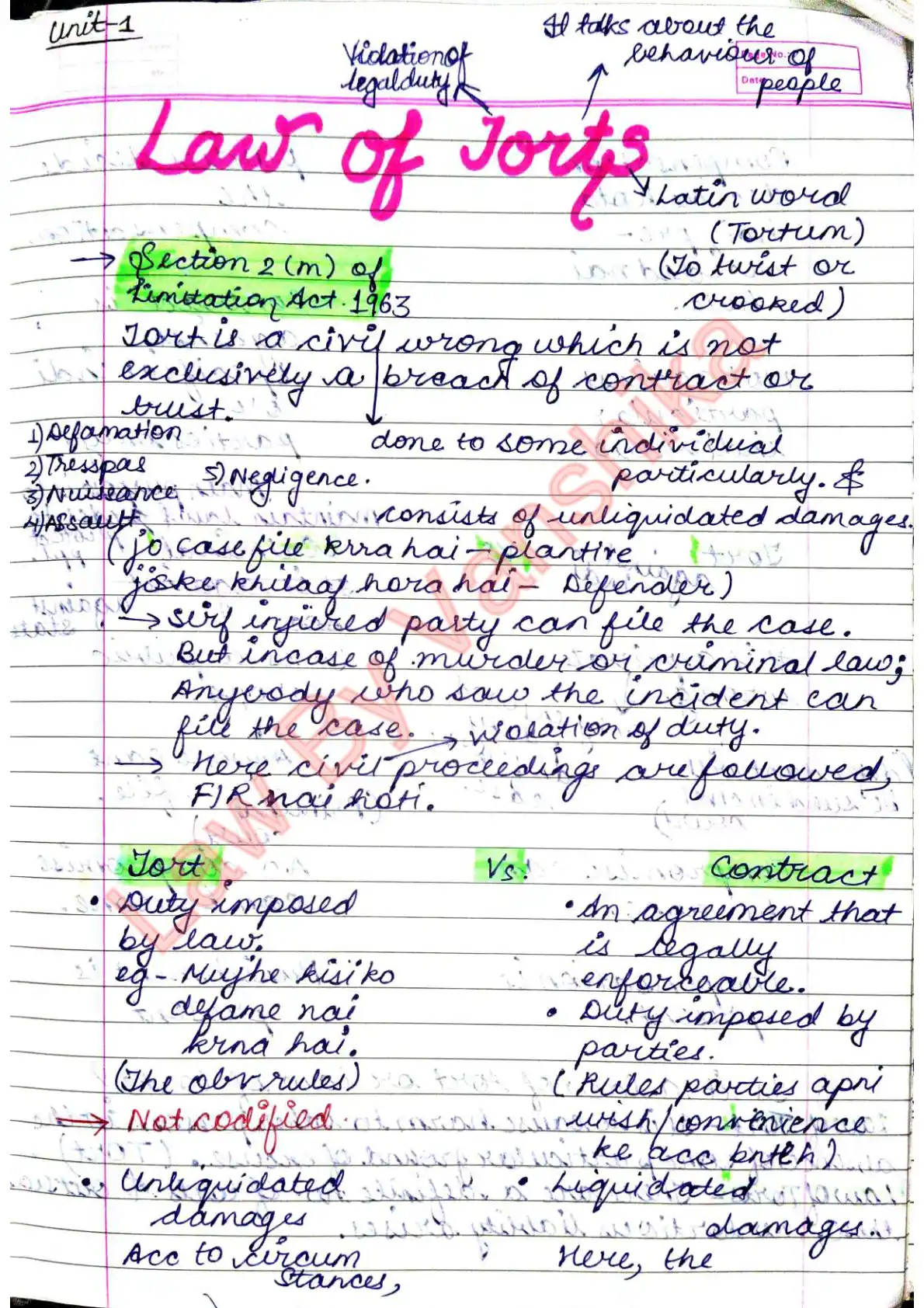
- Introduction to the Law of Torts — Meaning, nature, scope, and essential principles of tort law, including the differences between tort, contract, and criminal law.
- Law of Torts vs. Law of Tort — Understand the pluralist and general-principle approaches to tort liability associated with Salmond and Winfield.
- Injuria Sine Damnum & Damnum Sine Injuria — Distinguish infringement of a legal right without actual loss from actual loss without infringement of a legal right, with reference to Ashby v. White and the Gloucester Grammar School Case.
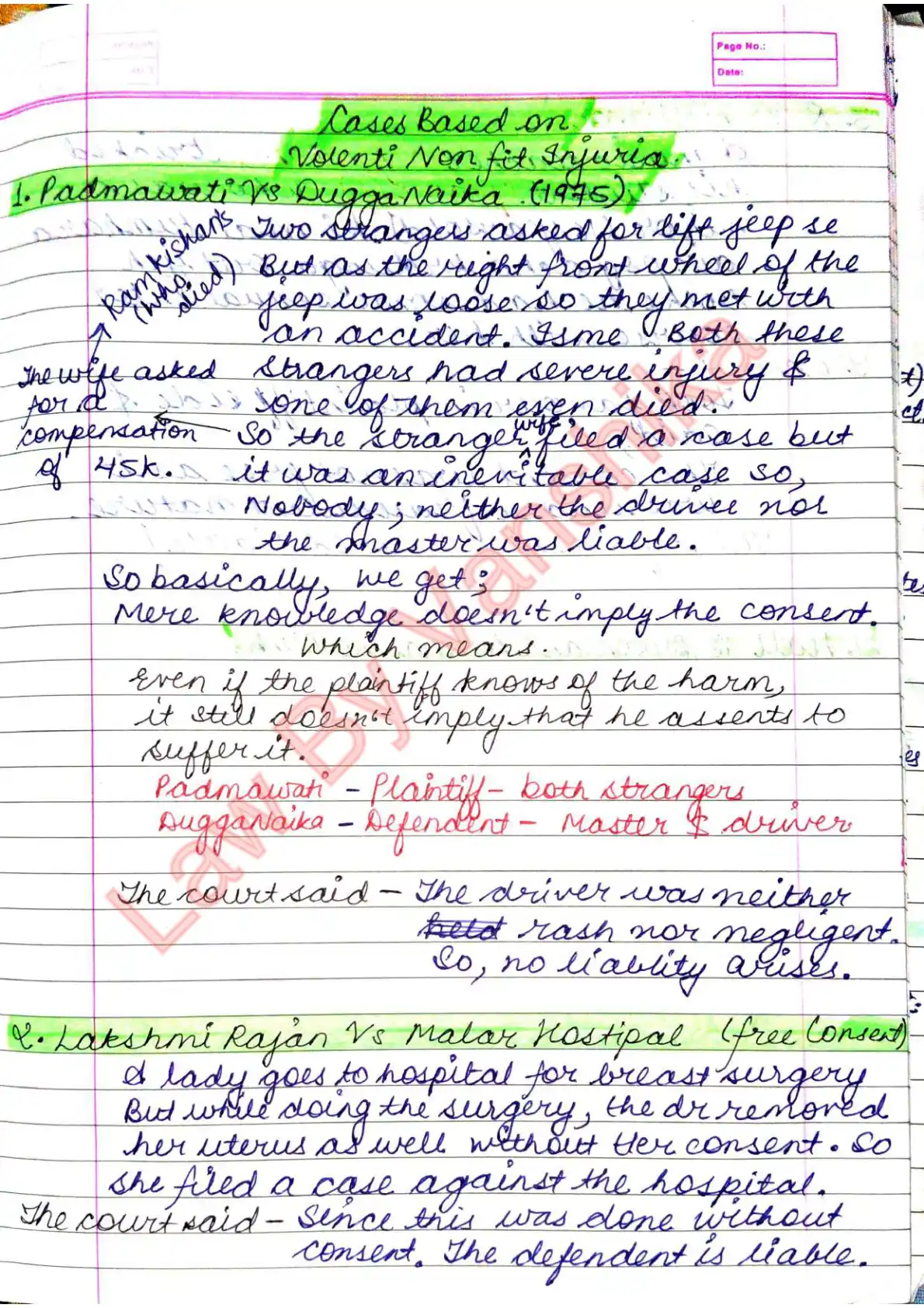
- General Defences in Tort Law — Study Volenti Non Fit Injuria, plaintiff as the wrongdoer, inevitable accident, Act of God, private defence, mistake, necessity, and statutory authority.
- Strict Liability — Understand the principle of liability for certain dangerous escapes or activities without proof of negligence, including its essential requirements and exceptions.
- Defamation — Essentials, Types, Innuendo & Defences — Learn the essentials and types of defamation, the meaning of innuendo, and recognised defences such as truth, fair comment, and privilege where applicable.
- Trespass, Assault, Battery & False Imprisonment — Understand trespass to the person, land, and goods; distinguish assault from battery; examine unlawful restraint of movement; and revise the relevant essentials and defences.
- Nuisance — Types & Defences — Compare public and private nuisance, their essential elements, available remedies, and recognised defences.
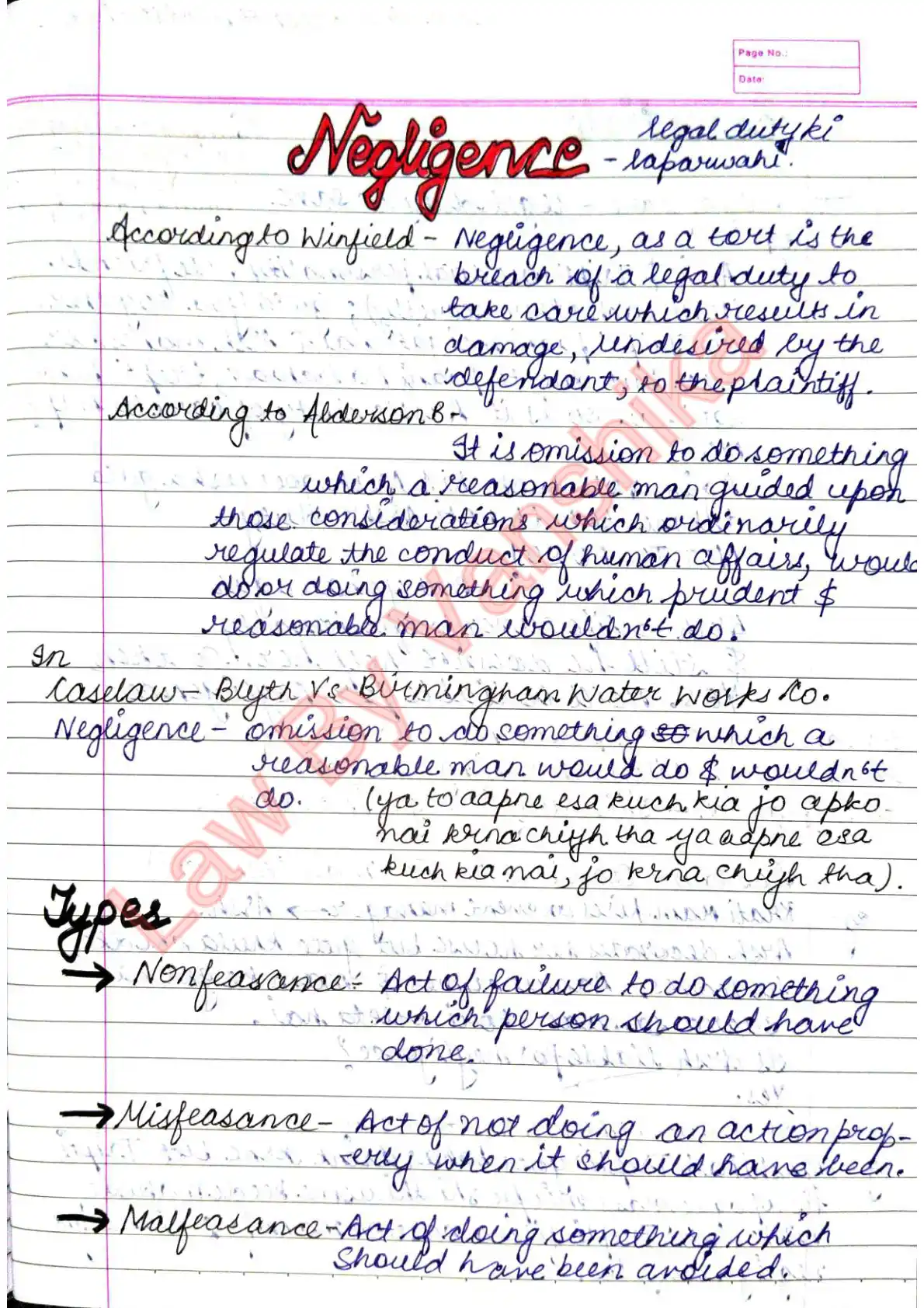
- Negligence — Essentials, Types & Related Principles — Study duty of care, breach, causation, and damage, along with contributory negligence, the last opportunity rule, and Res Ipsa Loquitur.
- Nervous Shock & Medical Negligence — Examine claims involving psychiatric injury, the standard of care expected of medical professionals, breach of duty, causation, and relevant legal principles, including Lakshmi Rajan v. Malar Hospital.
- Malicious Prosecution — Essentials & Defences — Understand the essential elements of malicious prosecution, the requirements for establishing liability, and the possible defences.
- Sovereign Immunity — Examine the scope of state immunity in tort claims, its historical basis, and developments in Indian law.
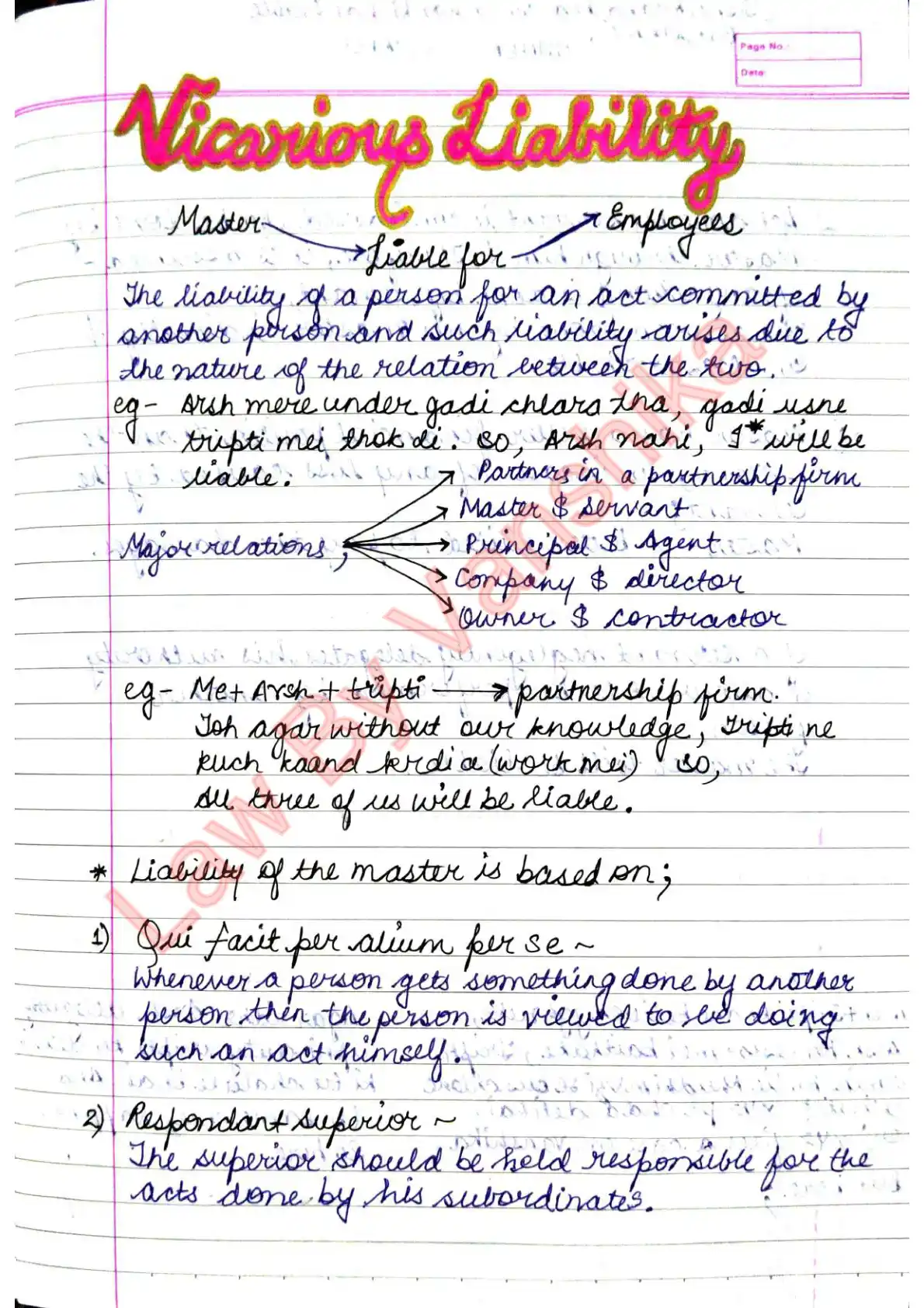
- Vicarious Liability — Understand when one person or organisation may be held liable for a tort committed by another, particularly in employer–employee relationships.
- Legal Maxims and Remedies — Study Ubi Jus Ibi Remedium and Actio Personalis Moritur Cum Persona, their meanings, applications, and limitations in tort law.
- Important Case Laws — Revise the facts, issues, judgments, and legal principles of important cases, including Ashby v. White, Bhim Singh v. State of Jammu & Kashmir, Gloucester Grammar School Case, Padmavati v. Dugganaika, Lakshmi Rajan v. Malar Hospital, R v. Williams, Haynes v. Harwood, and other landmark decisions.
These notes provide a structured resource for understanding core tort law concepts, revising legal principles, and preparing case-supported examination answers.
write better answers
Tips for Writing Better Answers in Law of Torts Exams
Law of Torts requires conceptual understanding, clear explanations, and the ability to evaluate legal theories. Use these tips to make your examination answers more structured and effective.
- 1
Start by defining the tort and identifying its essentials.
Briefly explain the relevant tort and identify the elements that the claimant must establish, such as duty, breach, causation, or legally recognised damage where applicable.
- 2
Support legal principles with relevant case laws.
Use cases such as Ashby v. White, Gloucester Grammar School Case, and other prescribed authorities to show how a legal principle has been applied.
- 3
Distinguish between related tort concepts.
Clearly compare concepts such as injuria sine damnum and damnum sine injuria, tort and crime, and assault and battery.
- 4
Explain the relevant defences.
Consider whether a defence applies to the facts, and state its key requirements and limitations rather than merely listing its name.
- 5
Apply each principle to the facts of the question.
Identify the relevant conduct, duty or right, the alleged wrong, causation, damage, and any available defence before reaching a conclusion.
- 6
Use a clear, exam-oriented answer structure.
Organise your answer with an introduction, legal rule, relevant case authority, application to the facts, and a concise conclusion.
exam tip
Prioritize understanding over memorization. Practise explaining each tort, defence, and case principle in your own words, and allocate your time according to the marks assigned to each question.
before you buy
Frequently Asked Questions

about the founder
Vanshika Tomar
I'm Vanshika Tomar, a BA LLB student with a passion for reading, writing, and simplifying complex legal concepts into clear and easy-to-understand study material. My goal is to help students study smarter through well-structured and exam-oriented notes.
Every note available on this platform has been personally handwritten and prepared by me during my own exam preparation. These notes played a significant role in helping me achieve excellent academic results, and I truly hope they make your learning journey easier, more organized, and more confident. Thank you for being a part of this journey. Happy Learning!
For law notes in Hindi language or other queries, DM on the given IG account
@vanshikaaa01__