
foundation subject
Muslim Law Notes
Muslim Law is an important subject for LLB and BA LLB students, covering personal-law principles relating to marriage, dower, divorce, maintenance, gifts, wills, waqf, guardianship, and inheritance. These handwritten Muslim Law notes explain core concepts including Nikah, Iddat, Mahr, Talaq, Hiba, Wasiyat, and Muslim succession, alongside important statutes and judicial decisions. You can purchase the complete Muslim Law notes as one combined bundle or buy the individual parts separately to focus on a specific portion of the syllabus. All notes are handwritten, well-organized, and delivered instantly as downloadable PDFs after payment.
Secure Payment
Razorpay protected
Instant PDF Access
Download right after payment
Verified Handwritten Notes
Prepared by Vanshika
Free preview for all notes
See quality before buying

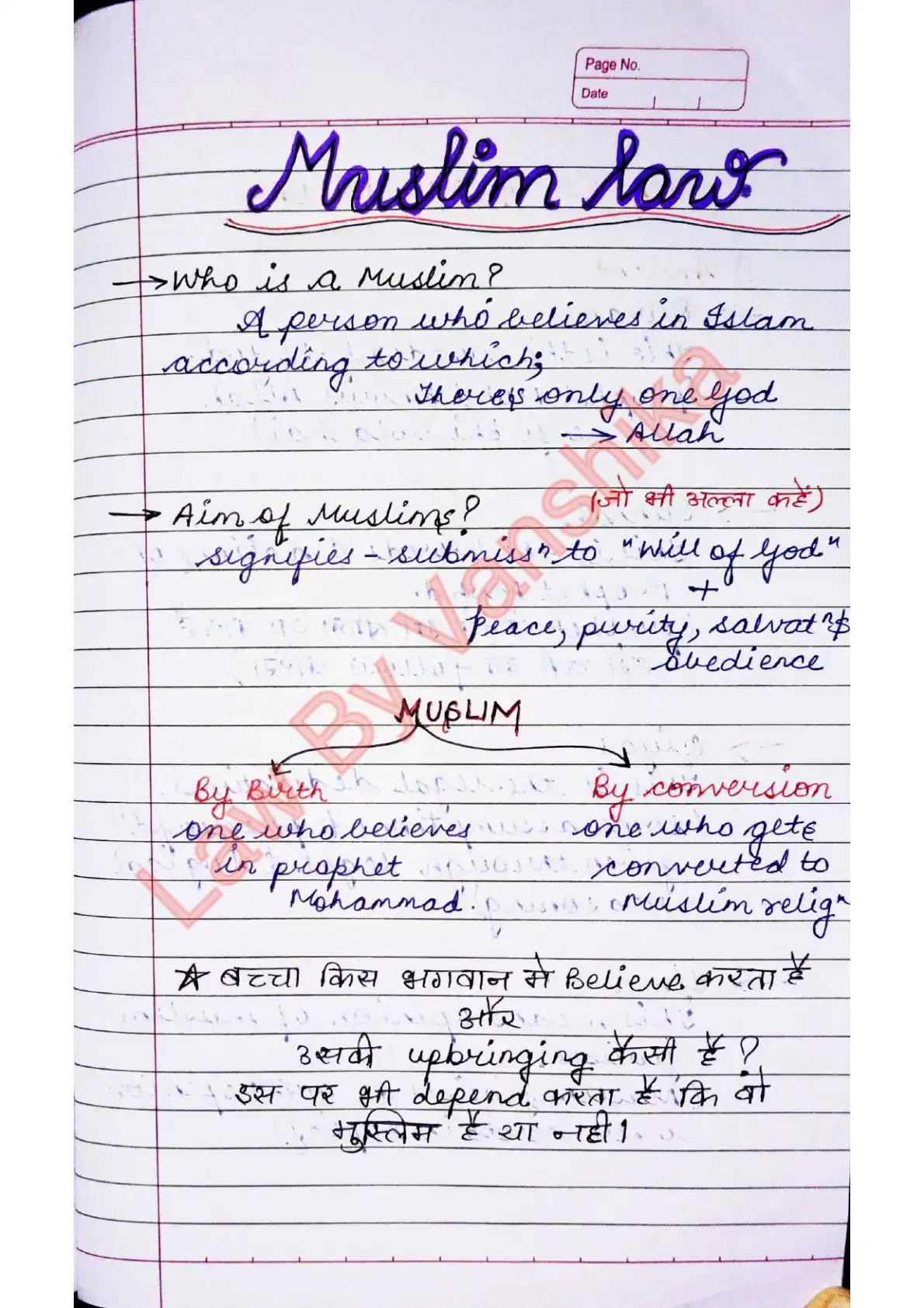
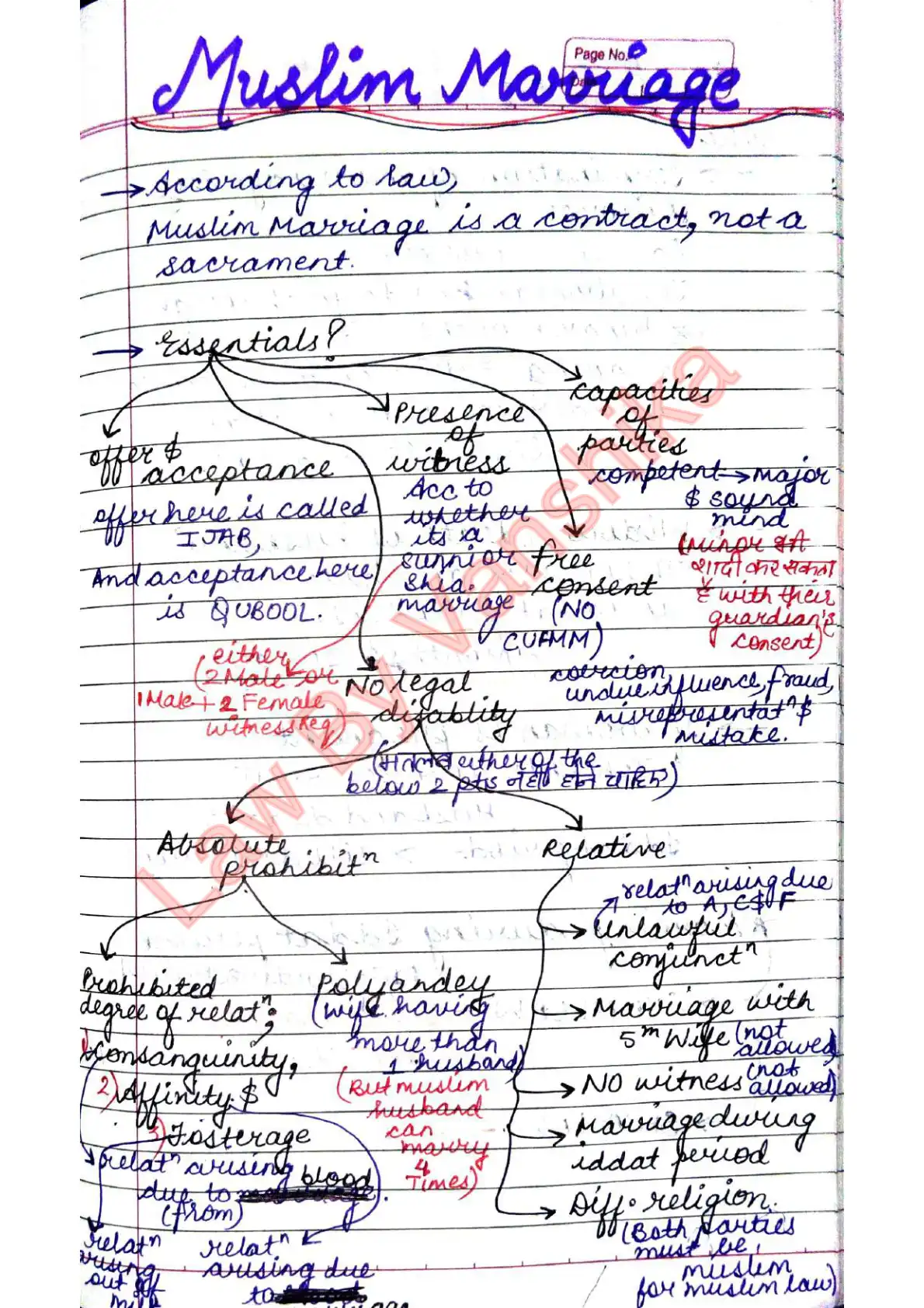
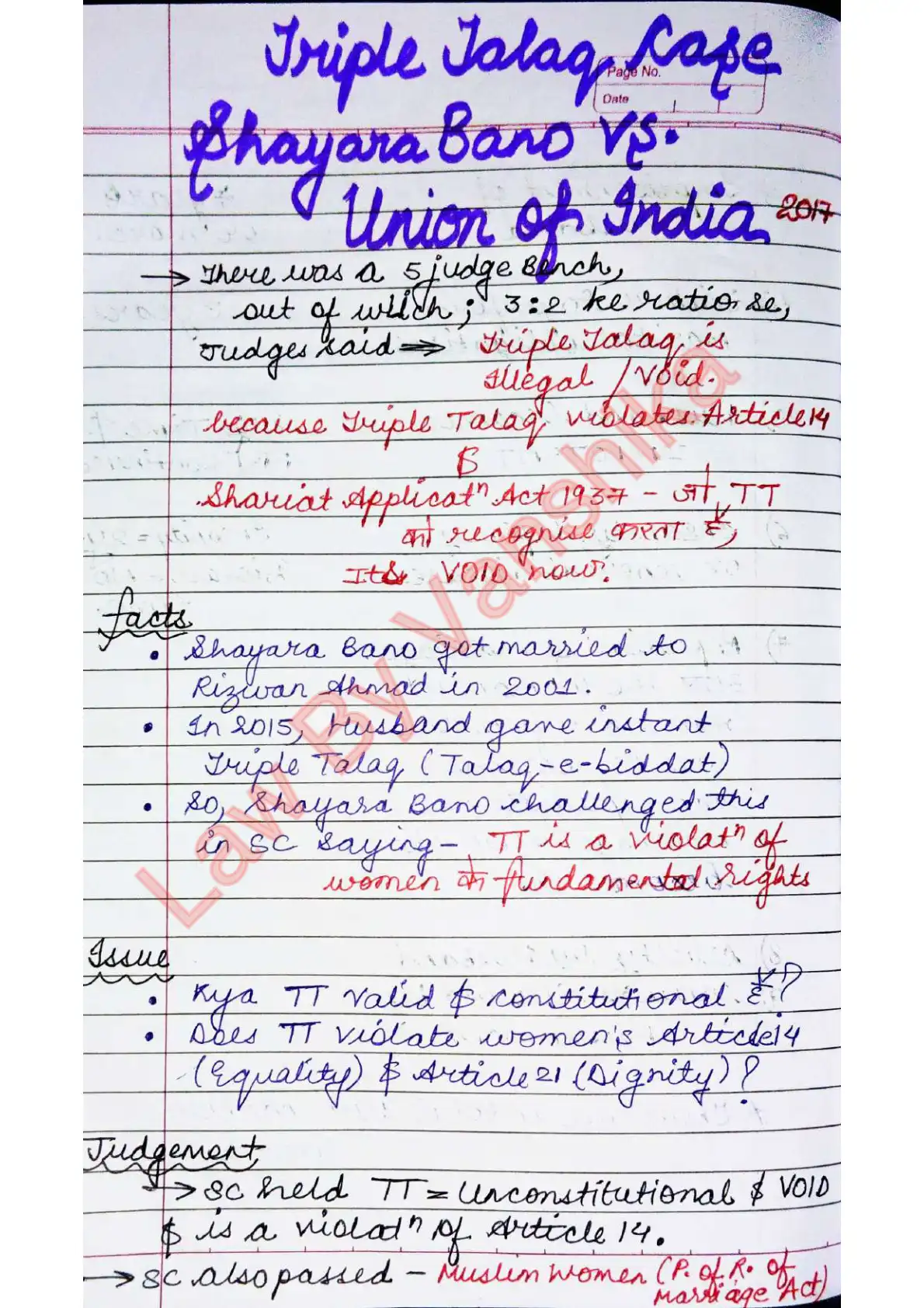
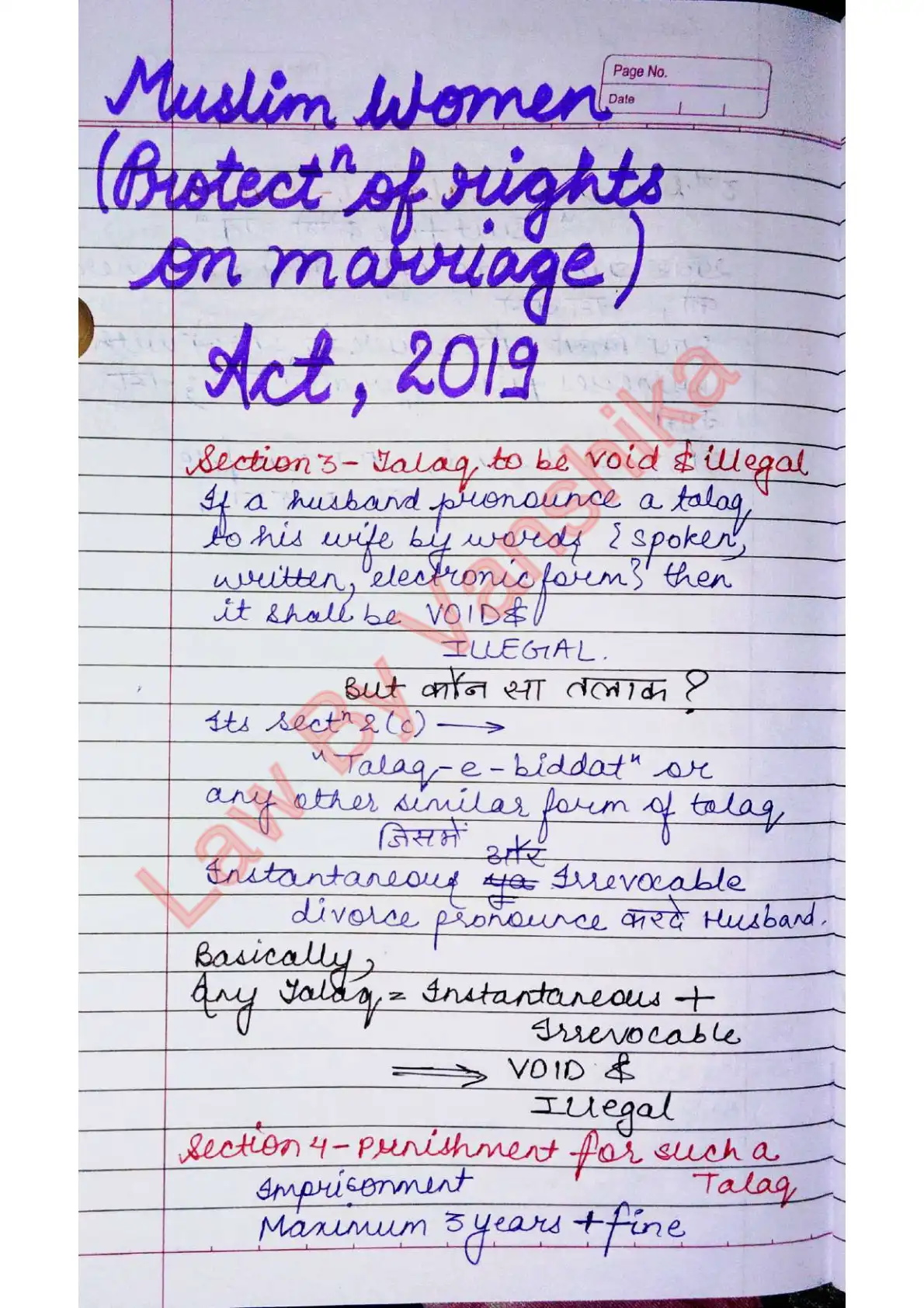
syllabus coverage
What Will You Learn from These Muslim Law Notes?
Muslim Law covers personal-law principles relating to marriage, divorce, family relationships, property, and succession. These handwritten notes help BA LLB and LLB students understand key doctrines, statutory developments, and important judicial decisions in a structured, exam-oriented format.
Topics covered in these notes:
- Introduction to Muslim Law — Understand the meaning and scope of Muslim Law, who is regarded as a Muslim for personal-law purposes, and the principal sources of Muslim Law.
- Sources and Schools of Muslim Law — Study primary and secondary sources, the major schools of Muslim Law, and key differences between Sunni and Shia doctrines where relevant.
- Muslim Marriage (Nikah) and Its Types — Revise the nature, essentials, legal effects, and types of Nikah, including the distinctions traditionally drawn between valid, irregular, and void marriages.
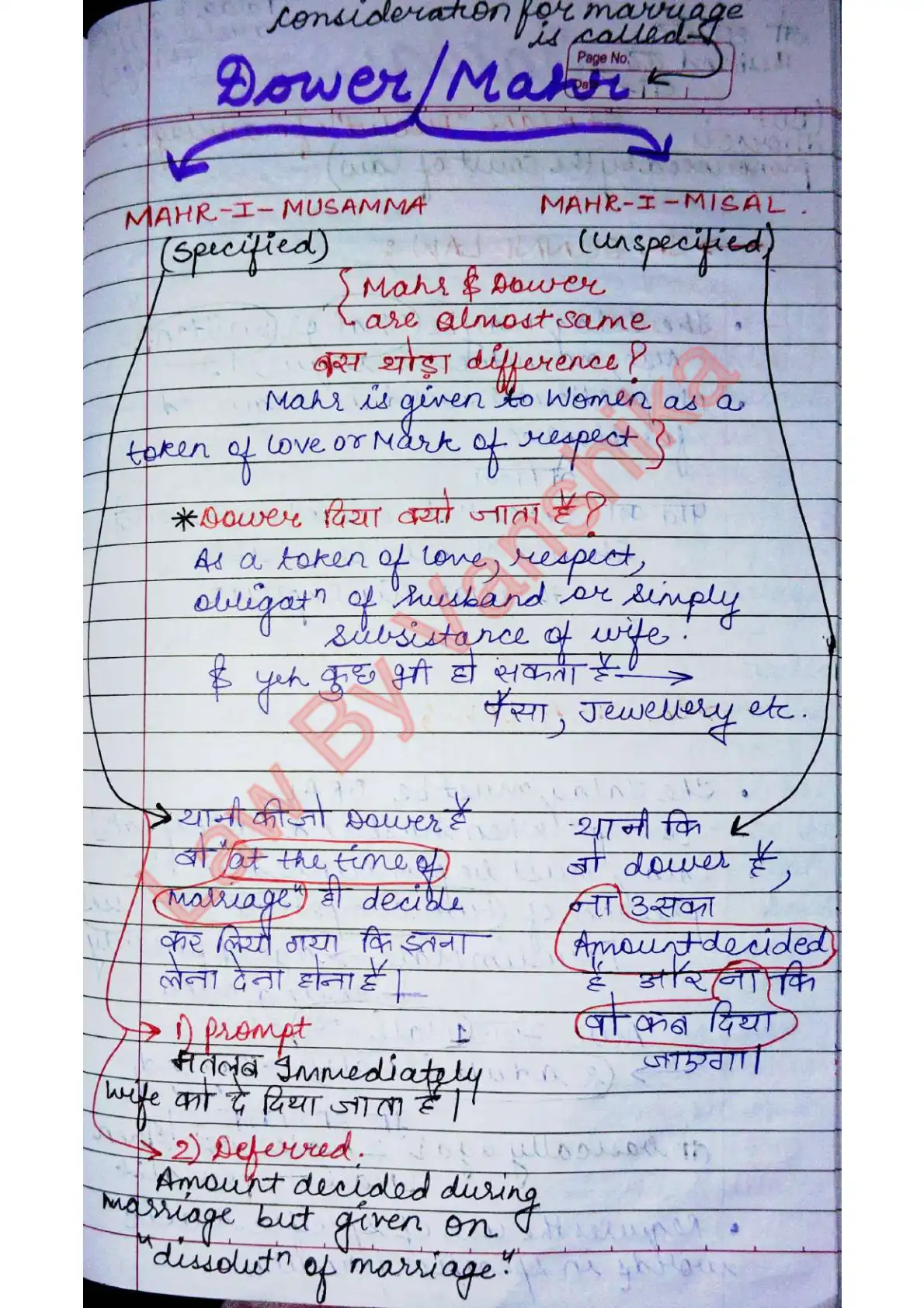
- Dower (Mahr) and Kharcha-e-Pandan — Understand the purpose and forms of dower, prompt and deferred Mahr, and the concept of Kharcha-e-Pandan as addressed in Muslim personal-law study.
- Iddat — Periods and Legal Significance — Learn the relevant periods of Iddat in different circumstances and understand its legal significance following divorce or the death of a husband.
- Talaq, Divorce and Dissolution of Marriage — Study the recognised forms of Talaq and other modes of dissolution, including the Dissolution of Muslim Marriages Act, 1939, and the legal framework surrounding divorce.
- Triple Talaq and the 2019 Act — Examine Shayara Bano v. Union of India and the Muslim Women (Protection of Rights on Marriage) Act, 2019, including the legal treatment of instant triple Talaq.
- Khiyar-ul-Bulugh (Option of Puberty) — Understand the option of puberty, the circumstances in which it may arise, and the relevant requirements and limitations under Muslim personal law.
- Maintenance under Muslim Law — Revise the principles governing maintenance, the circumstances in which it may be claimed, and relevant statutory developments affecting Muslim women and family relationships.
- Gift (Hiba) and Its Types — Study the essentials of a valid Hiba, including declaration, acceptance, and delivery of possession, along with its main types and limitations.
- Will (Wasiyat) — Understand the meaning and essentials of a Wasiyat, testamentary limits under Muslim Law, and the relationship between a will and inheritance.
- Waqf and Mutawalli — Learn the meaning, essentials, and types of Waqf, along with the role, powers, duties, and position of a Mutawalli.
- Guardianship and Custody of Children (Hizanat) — Distinguish guardianship from custody, study the principles of Hizanat, and consider how the welfare of the child is treated in custody matters.
- Pre-emption (Shufa) — Understand the concept and purpose of Shufa, the persons who may claim pre-emption, and the essential conditions and limitations of the right.
- Muslim Succession and Inheritance — Revise the basic principles of inheritance, categories of heirs, shares, and the way succession interacts with gifts and testamentary dispositions under Muslim Law.
These notes provide a structured resource for understanding core Muslim Law concepts, revising important doctrines and statutory provisions, and preparing well-organised examination answers.
write better answers
Tips for Writing Better Answers in Muslim Law Exams
Muslim Law requires a clear understanding of personal-law principles, relevant statutes, and judicial developments. Use these tips to make your examination answers more structured and effective.
- 1
Start with the relevant principle or legal provision.
Define the concept clearly and identify the applicable rule, doctrine, or statute before explaining its requirements and legal effect.
- 2
Distinguish between related concepts.
Compare concepts such as Sunni and Shia rules, valid and irregular marriages, different forms of Talaq, and guardianship and custody.
- 3
Use important cases and legislation accurately.
Refer to relevant authorities, including Shayara Bano v. Union of India and the Dissolution of Muslim Marriages Act, 1939, where they support the answer.
- 4
Organise answers topic by topic.
For topics such as Hiba, Wasiyat, and Waqf, explain the meaning, essentials, types, legal effects, and important limitations in a logical order.
- 5
Apply the rule to the facts of problem questions.
Identify the legal issue, state the relevant Muslim personal-law principle, apply it to the facts, and reach a reasoned conclusion.
- 6
Keep statutory developments in view.
Where a topic is affected by legislation or judicial decisions, distinguish the traditional personal-law position from the relevant statutory framework and current legal position taught in your syllabus.
exam tip
Prioritize understanding over memorization. Practise explaining each doctrine, legal requirement, and case principle in your own words, and allocate your time according to the marks assigned to each question.
before you buy
Frequently Asked Questions

about the founder
Vanshika Tomar
I'm Vanshika Tomar, a BA LLB student with a passion for reading, writing, and simplifying complex legal concepts into clear and easy-to-understand study material. My goal is to help students study smarter through well-structured and exam-oriented notes.
Every note available on this platform has been personally handwritten and prepared by me during my own exam preparation. These notes played a significant role in helping me achieve excellent academic results, and I truly hope they make your learning journey easier, more organized, and more confident. Thank you for being a part of this journey. Happy Learning!
For law notes in Hindi language or other queries, DM on the given IG account
@vanshikaaa01__