
personal law
Hindu Law Notes
Hindu Law is one of the most important personal law subjects for LLB and BA LLB students, covering the legal framework governing marriage, succession, adoption, maintenance, and guardianship among Hindus in India. These handwritten Hindu Law notes are designed to simplify complex statutory provisions and case laws into clear, exam-ready material. You can purchase the complete Hindu Law notes as one bundle, or buy notes for individual Acts separately if you only need to cover a specific topic. All notes are handwritten, well-organized, and delivered instantly as downloadable PDFs after payment.
Secure Payment
Razorpay protected
Instant PDF Access
Download right after payment
Verified Handwritten Notes
Prepared by Vanshika
Free preview for all notes
See quality before buying

syllabus coverage
What Will You Learn from These Hindu Law Notes?
Hindu law explores the nature, meaning, purpose, and principles of law. These handwritten notes are designed to help BA LLB and LLB students understand fundamental legal theories, important concepts, and landmark judgments in a structured, exam-oriented format.
Topics covered in these notes:
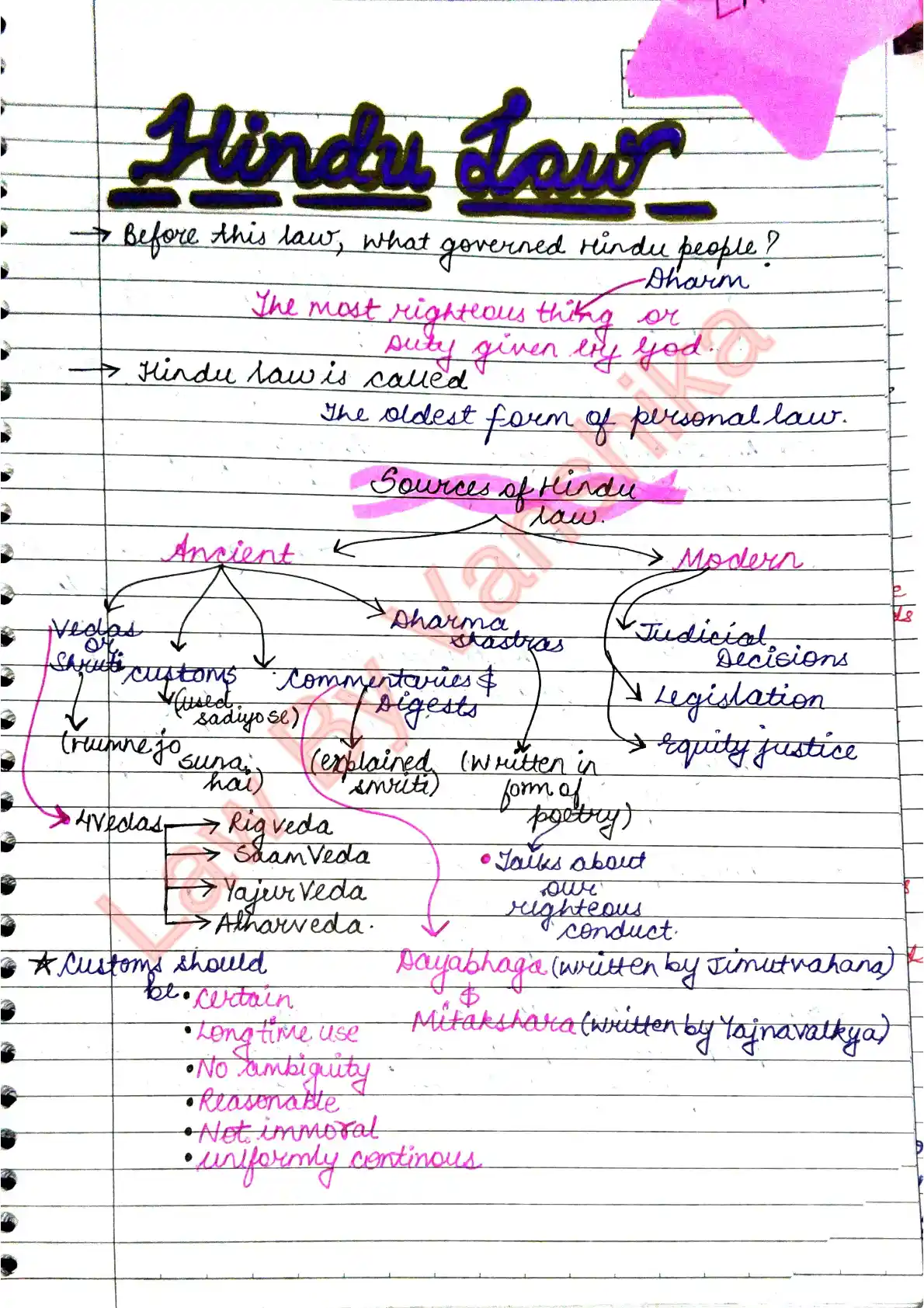
- Sources of Hindu Law — Understand the traditional and modern sources of Hindu Law, including ancient texts, customs, judicial precedents, and legislation.
- Mitakshara and Dayabhaga Schools — Study the origin, principles, and key differences between the Mitakshara and Dayabhaga Schools of Hindu Law, particularly in relation to joint family property and inheritance.
- Who Is a Hindu? — Understand the applicability of Hindu personal law and the legal framework for determining who is governed by Hindu Law.
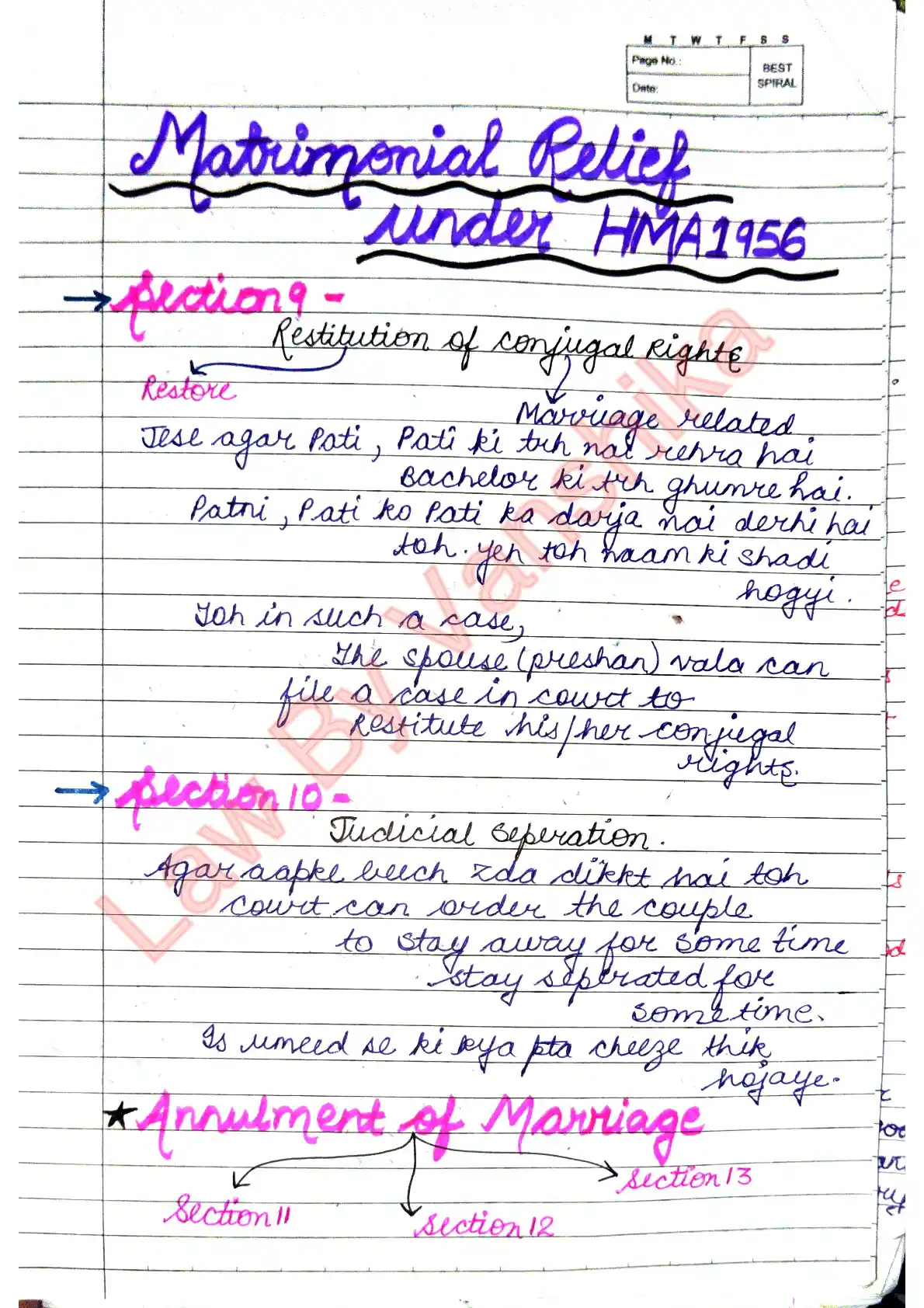
- Hindu Marriage Act, 1955 — Sections 3–28, covering conditions of marriage, ceremonies, registration, matrimonial remedies, divorce, judicial separation, and related provisions.
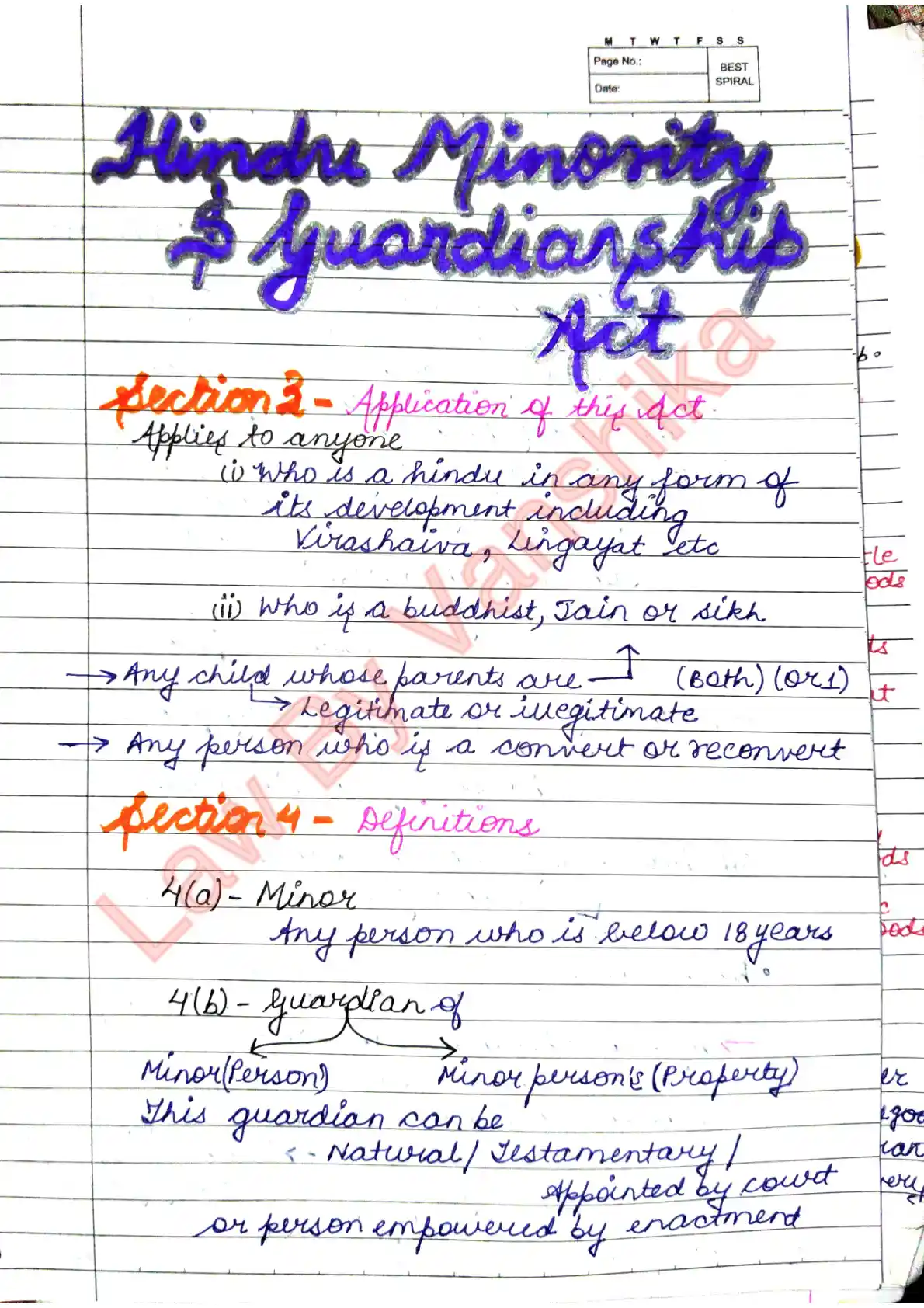
- Hindu Minority and Guardianship Act, 1956 — Sections 3–13, covering natural guardians, testamentary guardians, powers of guardians, and the welfare of minors.
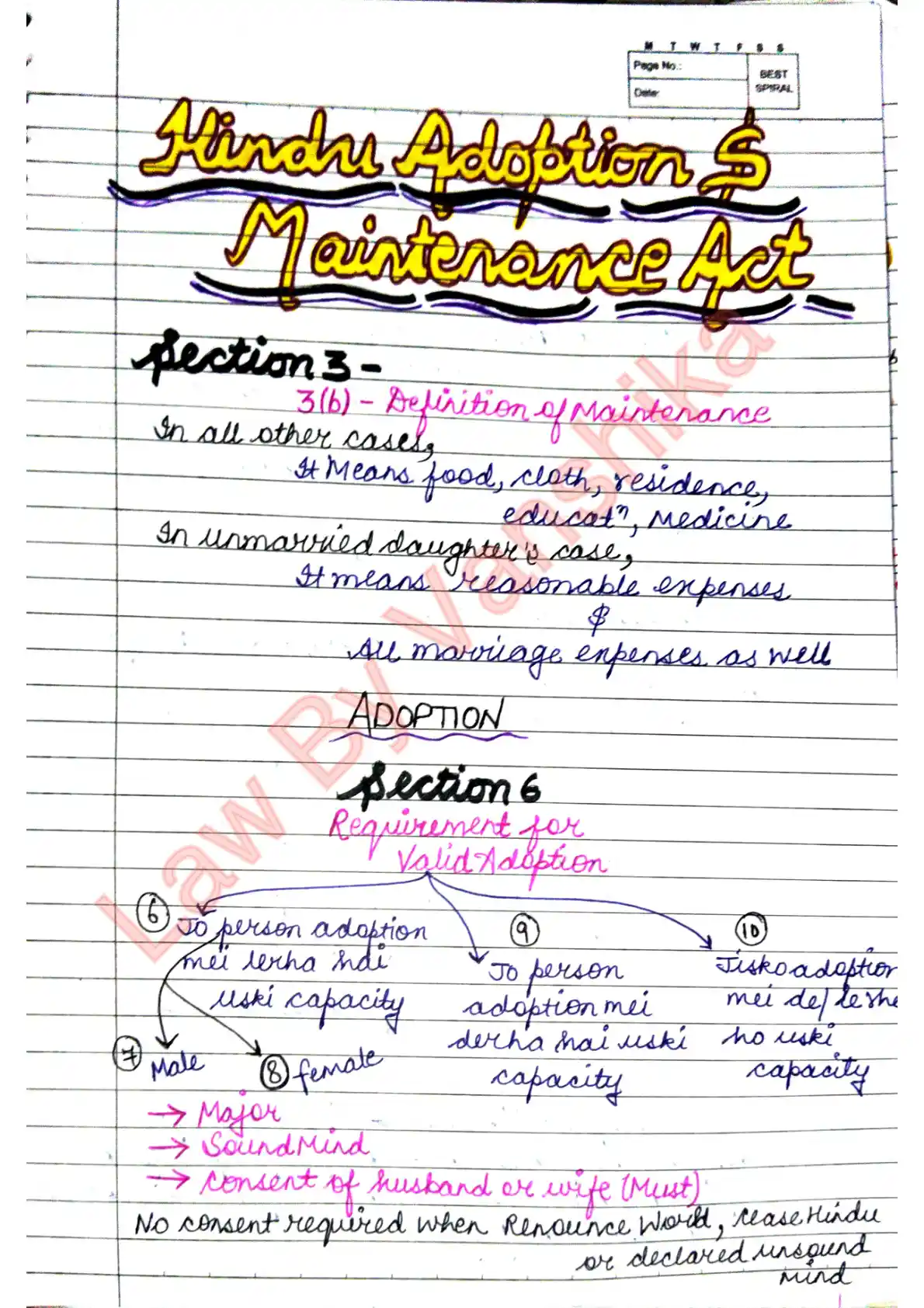
- Hindu Adoptions and Maintenance Act, 1956 — Sections 3–22, covering the requirements and legal effects of adoption, capacity to adopt and give in adoption, and maintenance obligations.
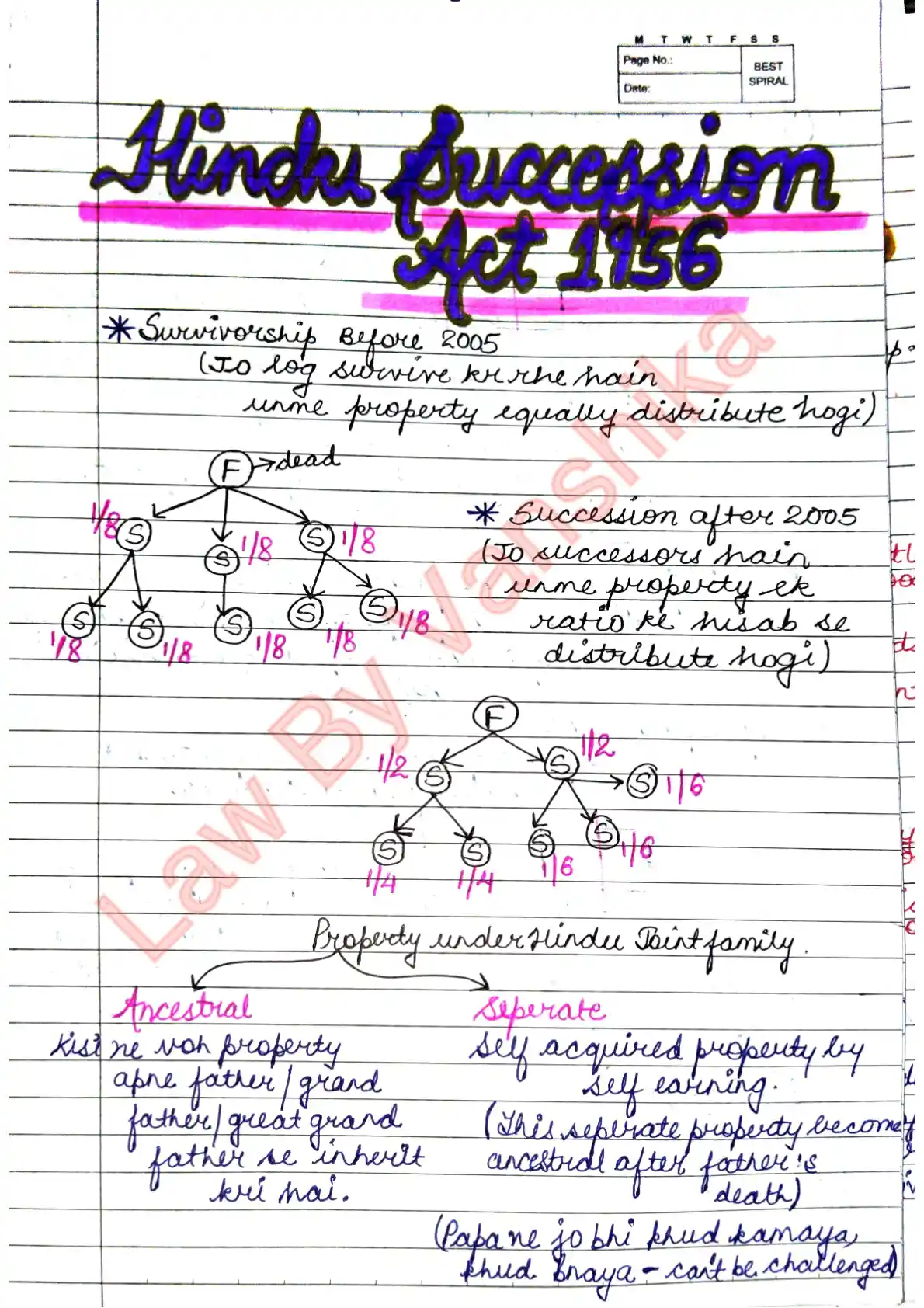
- Hindu Succession Act, 1956 — Introduction to Hindu succession, types of property, the Joint Hindu Family, the doctrine of pious obligation, and Stridhan.
- Succession Provisions and Class of Heirs — Relevant provisions, including Sections 3A–10 as listed in the notes, and the classification and succession rights of Class I and Class II heirs.
- Female Property and Devolution — Women's property rights, rules governing devolution of property, and the legal principles relating to succession under Hindu Law.
- Disqualification from Inheritance — Understand statutory grounds and legal principles concerning disqualification from inheritance under Hindu succession law.
- Religious Endowments — Study the meaning, nature, and legal principles governing religious endowments under Hindu Law.
- Important Case Laws — Landmark judgments, including Gurupad v. Hirabai, Vineeta Sharma v. Rakesh Sharma, Hunooman Persaud Panday v. Babooee, Githa Hariharan v. RBI, and Tulasamma v. Sesha Reddy.
These notes provide a structured resource for understanding core hindu law concepts and revising important topics.
write better answers
Tips for Writing Better Answers in Hindu Law Exams
Hindu law requires conceptual understanding, clear explanations, and the ability to evaluate legal theories. Use these tips to make your examination answers more structured and effective.
- 1
Identify the applicable legislation.
Begin by identifying the relevant Act, section, or legal principle. Explain the applicable provision in your own words before discussing its implications.
- 2
Distinguish between the schools of Hindu Law.
When comparing the Mitakshara and Dayabhaga Schools, explain their differences in relation to coparcenary, joint family property, and inheritance.
- 3
Use relevant statutory provisions.
Support your answers with provisions of the Hindu Marriage Act, Hindu Minority and Guardianship Act, Hindu Adoptions and Maintenance Act, or Hindu Succession Act, as applicable.
- 4
Explain important case laws.
Mention the relevant facts, legal issue, decision, and principle established by a judgment. For example, discuss Vineeta Sharma v. Rakesh Sharma when explaining daughters' coparcenary rights under Hindu succession law.
- 5
Structure answers around legal requirements.
For questions on marriage, adoption, guardianship, or succession, explain the essential conditions, applicable rules, exceptions, and legal consequences in a logical order.
- 6
Apply the law to factual problems.
Identify the legal issue, state the applicable statutory provision or principle, apply it to the given facts, and reach a reasoned conclusion.
exam tip
Prioritize understanding over memorization. Practise explaining legal theories in your own words and allocate your time according to the marks assigned to each question.
before you buy
Frequently Asked Questions

about the founder
Vanshika Tomar
I'm Vanshika Tomar, a BA LLB student with a passion for reading, writing, and simplifying complex legal concepts into clear and easy-to-understand study material. My goal is to help students study smarter through well-structured and exam-oriented notes.
Every note available on this platform has been personally handwritten and prepared by me during my own exam preparation. These notes played a significant role in helping me achieve excellent academic results, and I truly hope they make your learning journey easier, more organized, and more confident. Thank you for being a part of this journey. Happy Learning!
For law notes in Hindi language or other queries, DM on the given IG account
@vanshikaaa01__