
foundation subject
Law Of Contract Notes
The Indian Contract Law, is one of the most scoring and frequently tested subjects for LLB and BA LLB students, covering the formation, performance, and breach of contracts, along with related remedies under the Specific Relief Act, 1963. These handwritten Contract Law notes break the subject into manageable parts, with clear explanations of sections, case laws, and illustrations. You can purchase the complete Contract Law notes as one combined bundle, or buy Part 1, Part 2, or the Specific Relief Act notes separately if you only need to cover a specific portion of the syllabus. All notes are handwritten, well-organized, and delivered instantly as downloadable PDFs after payment.
Secure Payment
Razorpay protected
Instant PDF Access
Download right after payment
Verified Handwritten Notes
Prepared by Vanshika
Free preview for all notes
See quality before buying

syllabus coverage
What Will You Learn from These Law Of Contract Notes?
Law of contract explores the nature, meaning, purpose, and principles of law. These handwritten notes are designed to help BA LLB and LLB students understand fundamental legal theories, important concepts, and landmark judgments in a structured, exam-oriented format.
Topics covered in these notes:
- Introduction to Contract Law — Introduction to the Indian Contract Act, 1872, and the fundamental principles governing contracts.
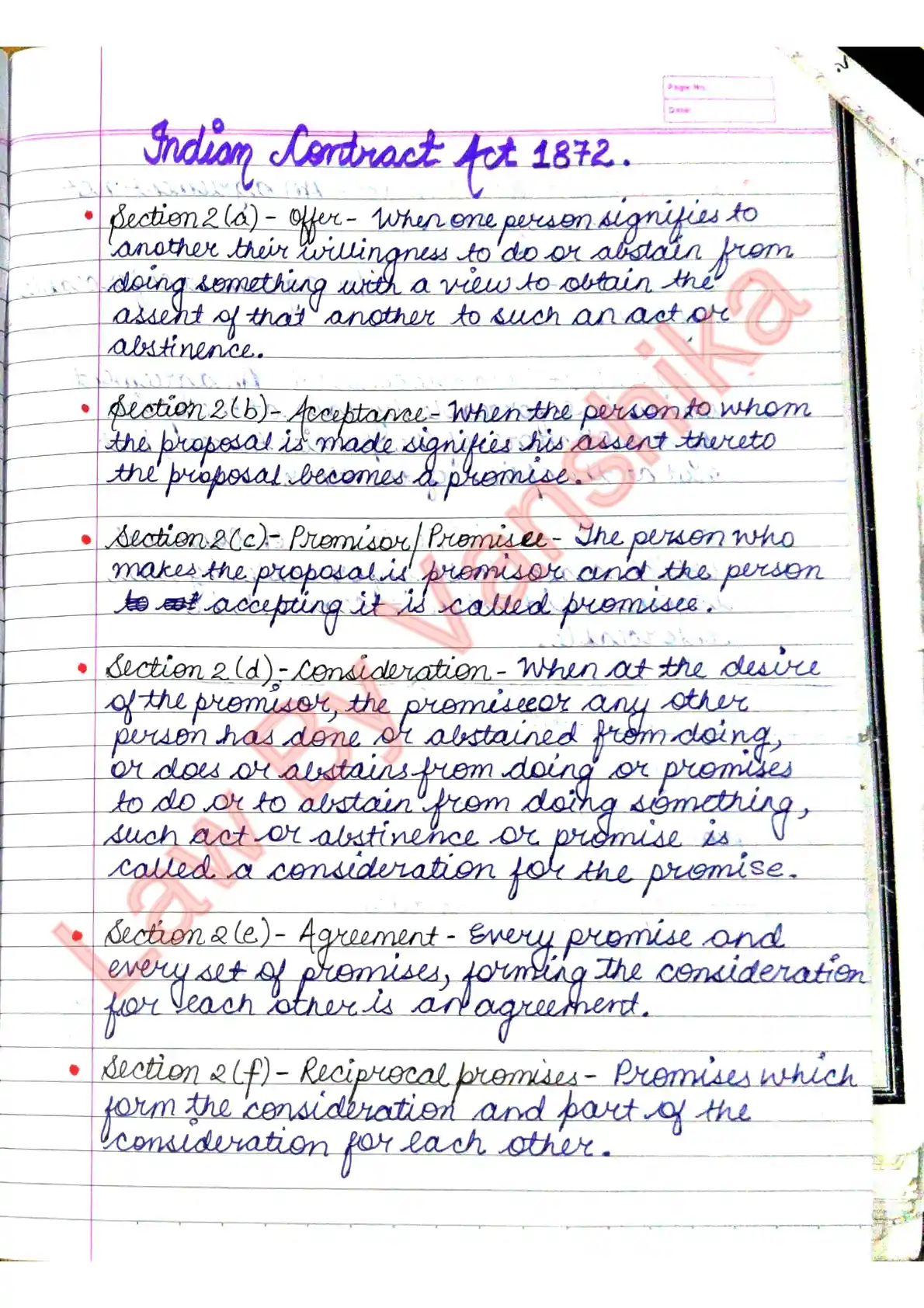
- Definitions under Section 2 — Statutory definitions of proposal, acceptance, consideration, agreement, contract, and other essential terms.
- Communication, Acceptance and Revocation — Rules governing communication, acceptance, and revocation of proposals under Sections 3–9.
- Essentials of a Valid Contract — Section 10 and the essential requirements for creating a legally enforceable agreement.
- Competency to Contract — Rules relating to contractual capacity and competency under Sections 11–12.
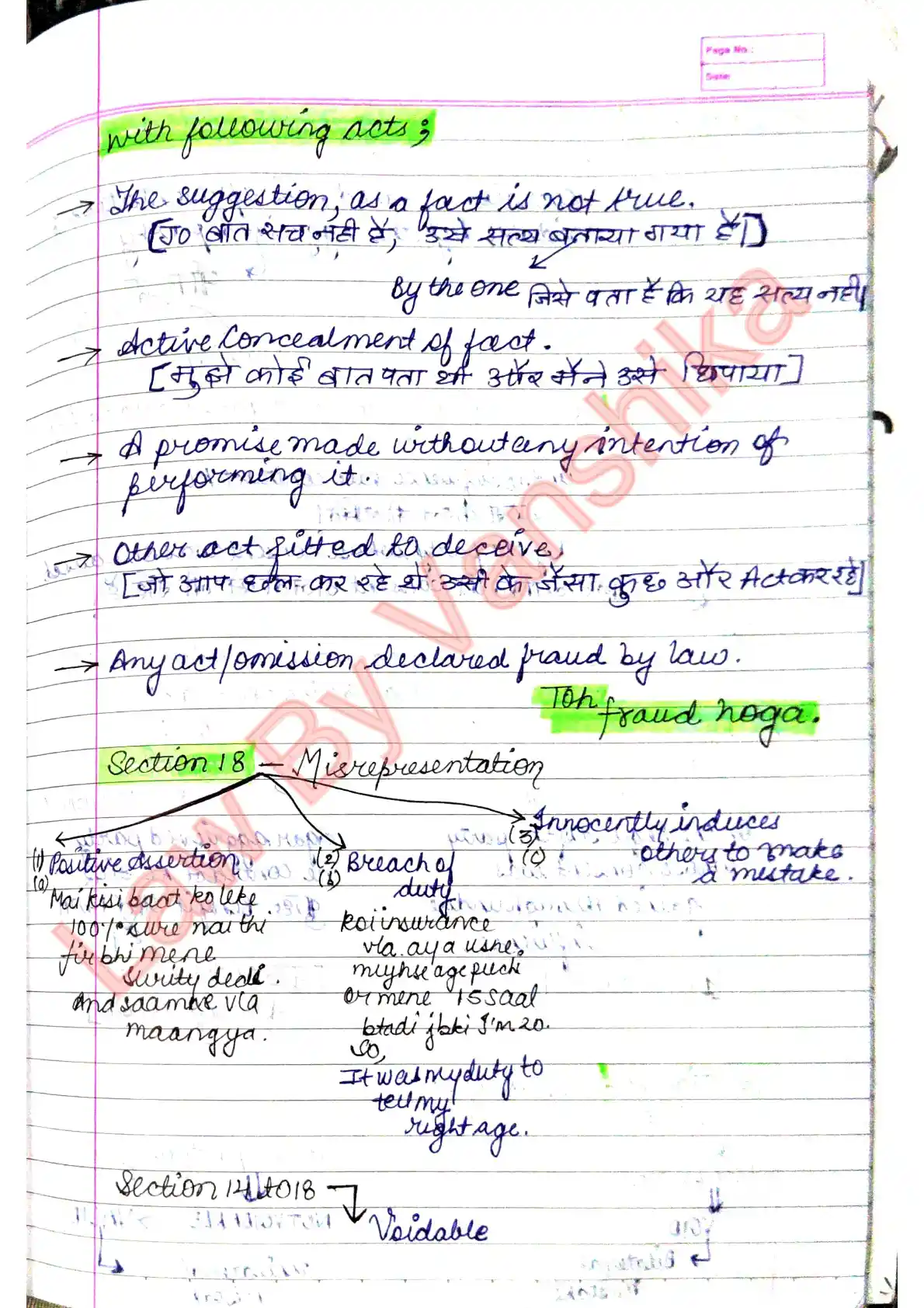
- Free Consent — Coercion, undue influence, fraud, misrepresentation, and mistake under Sections 13–22.
- Consideration and Lawful Object — Rules governing consideration and lawful objects, including the relevant provisions of Sections 23–30.
- Void and Contingent Agreements — Void agreements, their classifications, and contingent contracts under Sections 31–36.
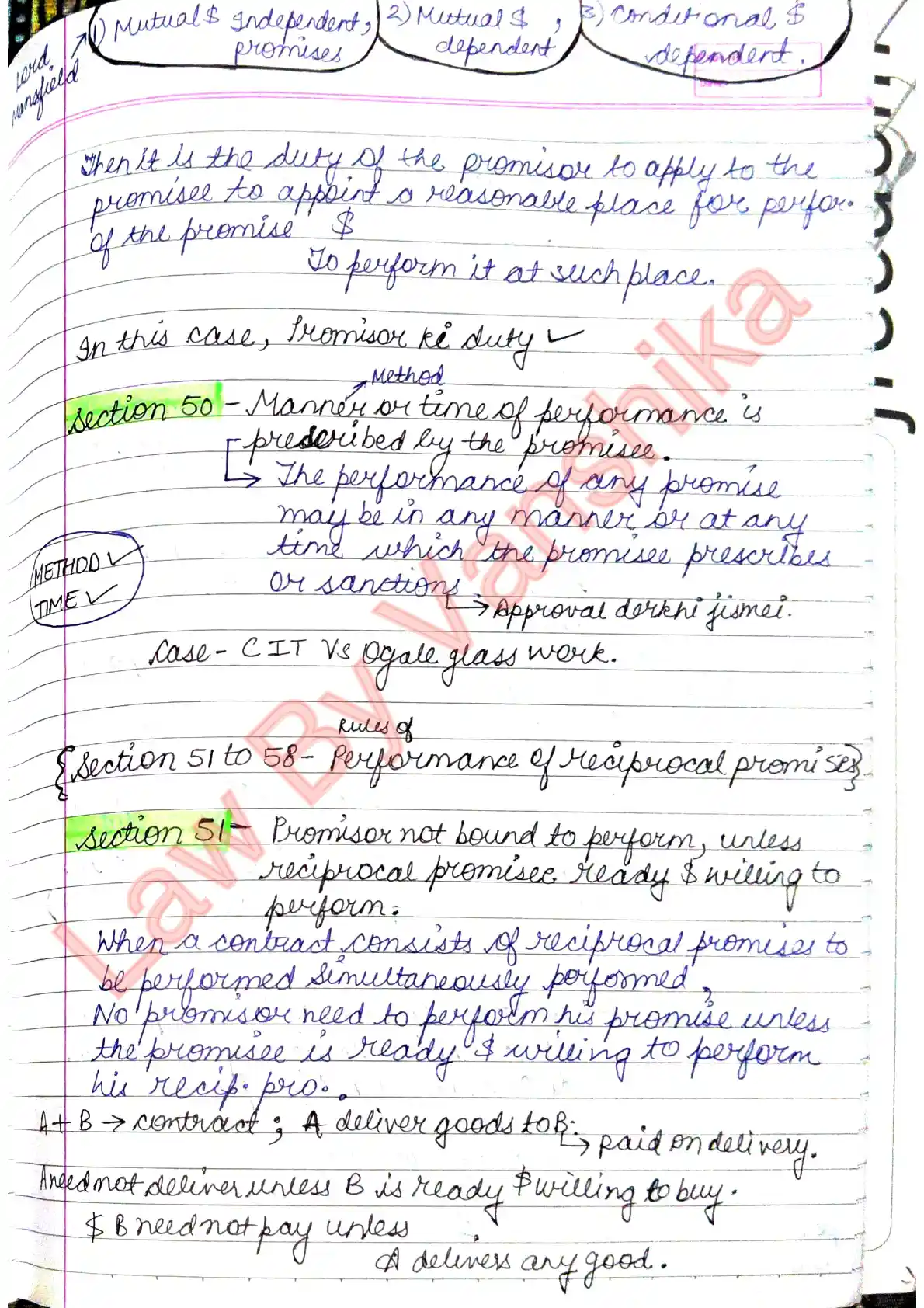
- Performance and Discharge of Contracts — Performance of contracts, reciprocal promises, appropriation of payments, and circumstances in which contractual obligations need not be performed.
- Quasi-Contracts and Breach — Quasi-contractual obligations under Sections 68–72 and consequences of breach under Sections 73–75.
- Indemnity and Guarantee — Rights, duties, and obligations of parties under Sections 124–147.
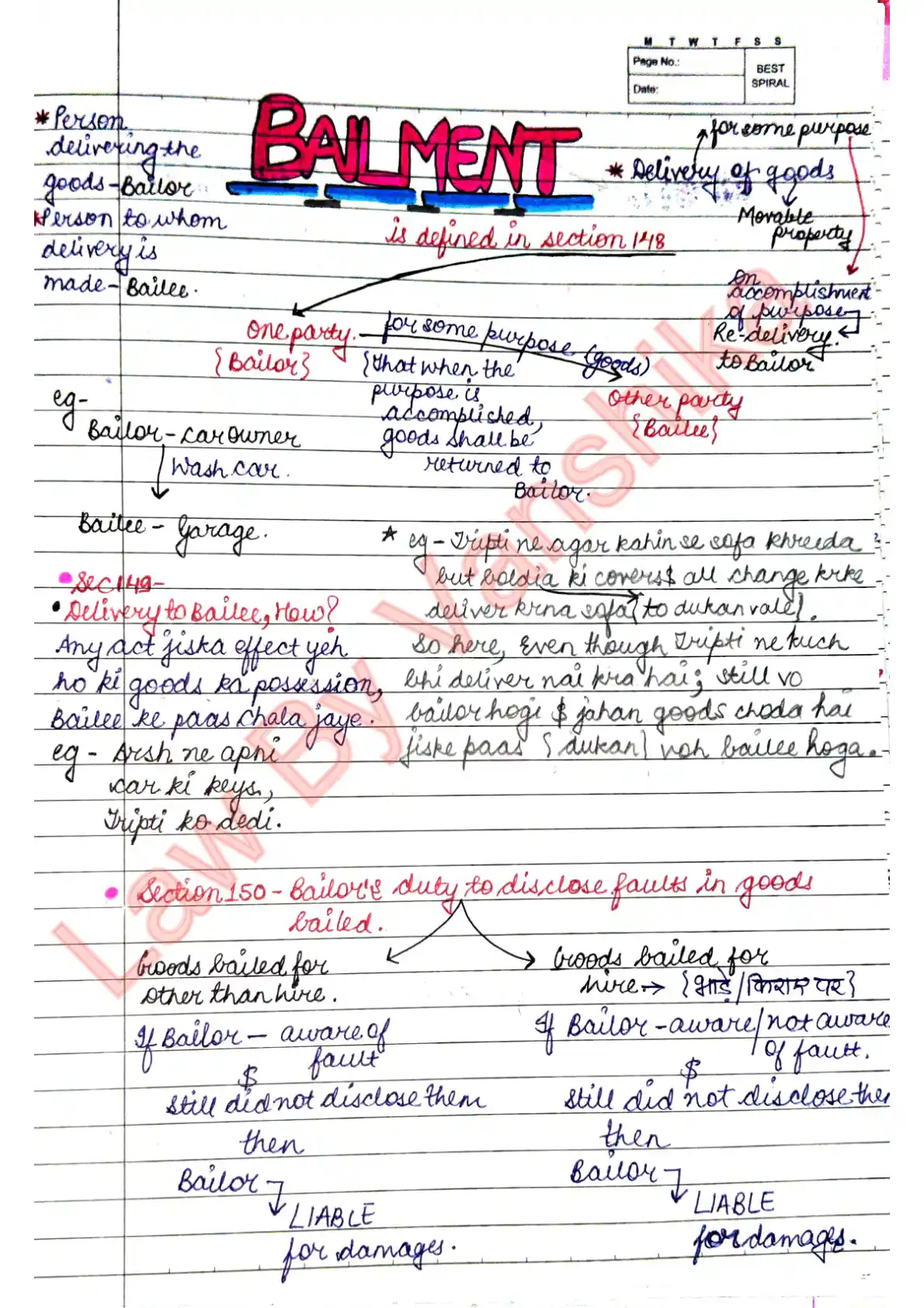
- Bailment and Pledge — Rights and duties of bailors, bailees, pawnors, and pawnees under Sections 148–181.
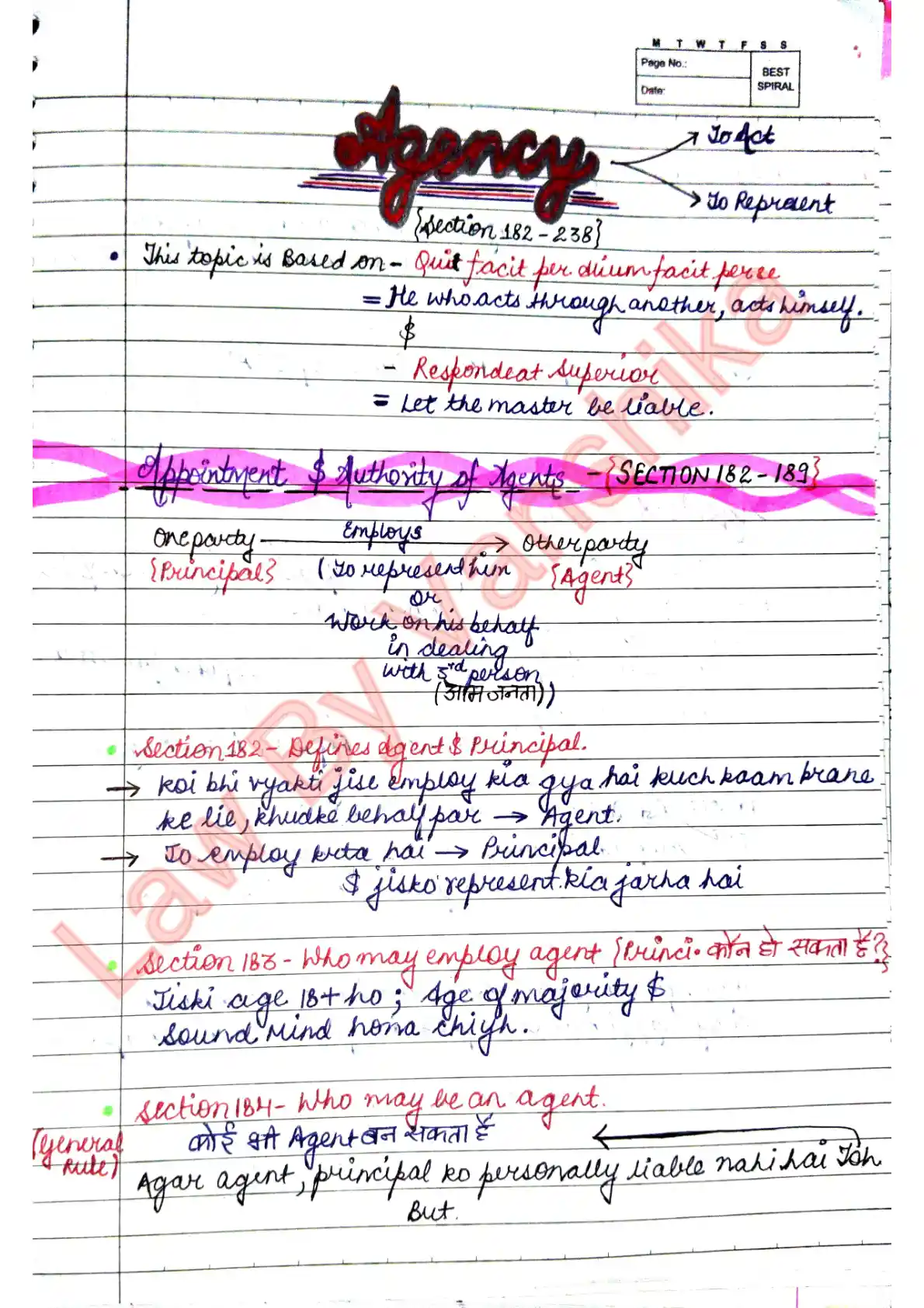
- Agency — Creation, authority, rights, duties, and termination of agency under Sections 182–238.
These notes provide a structured resource for understanding core contract law concepts and revising important topics.
write better answers
Tips for Writing Better Answers in Law Of Contract Exams
Law of contract requires conceptual understanding, clear explanations, and the ability to evaluate legal theories. Use these tips to make your examination answers more structured and effective.
- 1
Start with the relevant legal provision.
Identify the applicable section of the Indian Contract Act, 1872, and explain the legal principle in your own words.
- 2
Explain the essential elements.
When answering questions about valid contracts, free consent, or consideration, organize your answer around the essential requirements of the relevant doctrine.
- 3
Distinguish between related concepts.
Understand the differences between void and voidable agreements, indemnity and guarantee, and bailment and pledge. Use comparison tables while revising.
- 4
Apply the law to the facts.
For problem-based questions, identify the legal issue, state the applicable rule, apply it to the given facts, and reach a reasoned conclusion.
- 5
Use relevant case laws.
Include established judicial decisions where they directly support the legal principle being discussed. Explain the principle illustrated by each case.
- 6
Address exceptions and remedies.
Where relevant, explain statutory exceptions, the consequences of breach, and the remedies available to the affected party.
exam tip
Prioritize understanding over memorization. Practise explaining legal theories in your own words and allocate your time according to the marks assigned to each question.
before you buy
Frequently Asked Questions

about the founder
Vanshika Tomar
I'm Vanshika Tomar, a BA LLB student with a passion for reading, writing, and simplifying complex legal concepts into clear and easy-to-understand study material. My goal is to help students study smarter through well-structured and exam-oriented notes.
Every note available on this platform has been personally handwritten and prepared by me during my own exam preparation. These notes played a significant role in helping me achieve excellent academic results, and I truly hope they make your learning journey easier, more organized, and more confident. Thank you for being a part of this journey. Happy Learning!
For law notes in Hindi language or other queries, DM on the given IG account
@vanshikaaa01__